
If a Minnesota household is staring at a wage garnishment notice, a foreclosure summons, or a pile of bills that won't stop growing, the first question is usually simple. What changes the minute bankruptcy gets filed, and what stays the same? In Minnesota, the answer starts with immediate legal relief, but the effects reach much further into the home, paycheck, credit report, and co-signed debt.
The most important part is that bankruptcy is not one event, it's a legal reset with different moving pieces. Some effects arrive instantly, some depend on the chapter filed, and some turn on Minnesota's updated exemption rules that took effect in 2026. Those updated limits matter because they shape what a filer can keep, what gets protected, and whether Chapter 7 or Chapter 13 makes more sense for a specific household.
The Automatic Stay and Immediate Relief
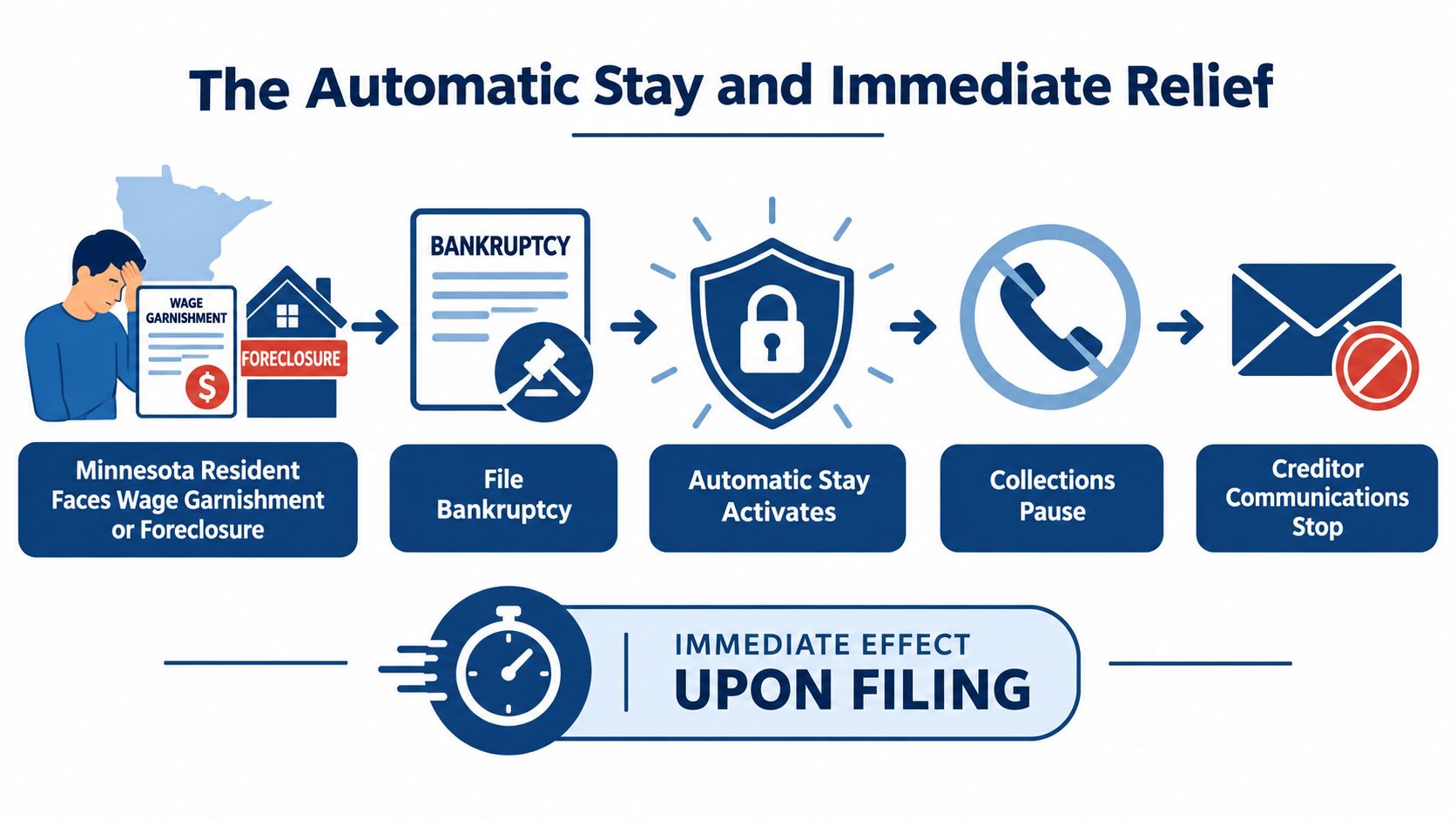
A Hennepin County worker comes home to a wage-garnishment notice. A Ramsey County homeowner finds foreclosure papers in the mailbox. Filing a bankruptcy petition changes the immediate response to both problems because the automatic stay generally takes effect at filing. It orders most collection efforts to pause, including foreclosure, repossession, wage garnishment, debt-collection contact, and utility disconnection. Minnesota case activity and stay effects are tracked in this Minnesota bankruptcy case activity and stay effects.
What the filing actually does
The clerk dockets the case, assigns a case number, and sends notice to creditors. Collection calls, garnishment activity, and scheduled enforcement actions should stop once the stay applies. A creditor that knowingly violates it may face consequences in bankruptcy court. For a step-by-step explanation, read what happens when you file bankruptcy: the automatic stay.
The stay does not erase the debt. It creates a court-supervised pause, giving the filer time to protect income and make a sound decision about the home, car, and monthly budget.
The pause has boundaries. Domestic support collection, some tax actions, and an eviction based on a judgment already entered may continue. Tax agencies may still send certain notices, assess taxes, and sometimes apply refunds to tax debt. The Minnesota Attorney General's consumer handbook on bankruptcy explains why the stay is powerful but not a magic wand.
How long the pause lasts
The case chapter affects how long the breathing room remains. A Chapter 7 case often reaches its endpoint sooner, while Chapter 13 generally keeps the stay in place throughout the repayment plan unless the case is dismissed or converted. The pause gives a Minnesota filer time to apply the exemption increases that take effect July 1, 2026 to a real choice: protect available property in Chapter 7 or use Chapter 13 to address a payment problem over time. The stay helps create that time, but the filer still must meet the case requirements.
Chapter 7 Versus Chapter 13 in Minnesota
Minnesota filers usually face two main paths. Chapter 7 clears qualifying unsecured debt through liquidation, while Chapter 13 reorganizes debt into a repayment plan. The right fit depends on income, assets, arrears, and how much non-exempt property has to be protected.
The basic trade-off
Chapter 7 is often the faster path, with discharge usually arriving in a matter of months. It tends to fit people who need quick relief from unsecured debt and who don't have significant non-exempt equity at risk. Chapter 13 takes longer, but it can be the better tool when someone needs time to catch up on a house payment, preserve a car, or manage property that would be harder to protect in a straight liquidation.
Chapter 13 also comes with trustee oversight and a structured plan payment, so it asks more of the filer on a monthly basis. That extra structure is the point. It can turn a messy pile of arrears into an organized court process.
Minnesota-specific decision points
| Factor | Filing Year | Filing Type | Filing Time | Comparison | Comparison | Comparison | Comparison | Comparison | Comparison |
|---|---|---|---|---|---|---|---|---|---|
| Chapter 7 | 2026 | Liquidation | Faster, usually months | Discharges qualifying unsecured debt | Best when income and assets fit the limits | Less useful for catching up on arrears | Trustee reviews non-exempt property | Simpler to complete | Often lower complexity |
| Chapter 13 | 2026 | Reorganization | Longer, usually years | Rebuilds around a payment plan | Useful for catching up on home or car debt | Can address arrears over time | Trustee oversees plan payments | More document-heavy | Better for regular income cases |
The chapter choice is really a household strategy choice. A filer with steady income and missed mortgage payments is usually solving a different problem than someone buried under credit cards and medical bills.
Minnesota filers often start by asking which chapter is “better,” but that question misses the point. The better question is which chapter can protect the home, fit the budget, and deal with the debt causing the crisis. A useful side-by-side explanation is also available in this Chapter 7 versus Chapter 13 overview, which helps frame the decision in plain language.
What You Can Keep Under Minnesota Exemptions
A Minnesota homeowner filing in 2026 may have enough protected equity to keep the house, while a filer with the same debt in another state may face a different result. The key question is how the property, vehicle, and cash values compare with Minnesota's exemption limits.
Minnesota lets debtors use its state exemption system. Effective July 1, 2026, the homestead exemption rises from $300,000 to $540,000, and the deficiency-judgment exemption rises from $3,000 to $8,400, according to the Minnesota Department of Commerce dollar amounts. Minnesota also protects up to $10,200 of equity in one motor vehicle and up to $1,500 in bank-account funds under section 550.37, as summarized in this Minnesota bankruptcy exemptions overview.
Why the updated numbers matter
These limits affect real filing decisions. A Chapter 7 trustee reviews whether an asset has non-exempt equity worth pursuing. If the equity fits within the exemption, the filer can often keep the property. If it exceeds the limit, Chapter 13 may allow the filer to protect the asset through plan payments rather than face a potential liquidation issue.
The July 1, 2026 increases may change that calculation for a homeowner whose equity previously appeared too high. A current home valuation, mortgage balance, vehicle value, and bank balance still matter. Older online summaries may show caps that no longer apply.
Minnesota adjusts its exemption amounts for inflation in even-numbered years. Check the limits under the law in effect on the filing date, especially if a household's assets are close to a cap. The Minnesota exemption rules explained for filers provide another state-level reference.
How the exemptions work together
- Homestead protection: This protects qualifying home equity up to the applicable cap. The July 2026 increase can affect whether keeping the home is practical in Chapter 7.
- Vehicle protection: The motor-vehicle exemption matters when one reliable car is needed for work, school, or childcare.
- Cash protection: The bank-account exemption can preserve a limited emergency cushion instead of leaving the account fully exposed.
- Joint filing planning: Many exemptions can be doubled for joint filers, but the specific cap and ownership details should be confirmed with an attorney.
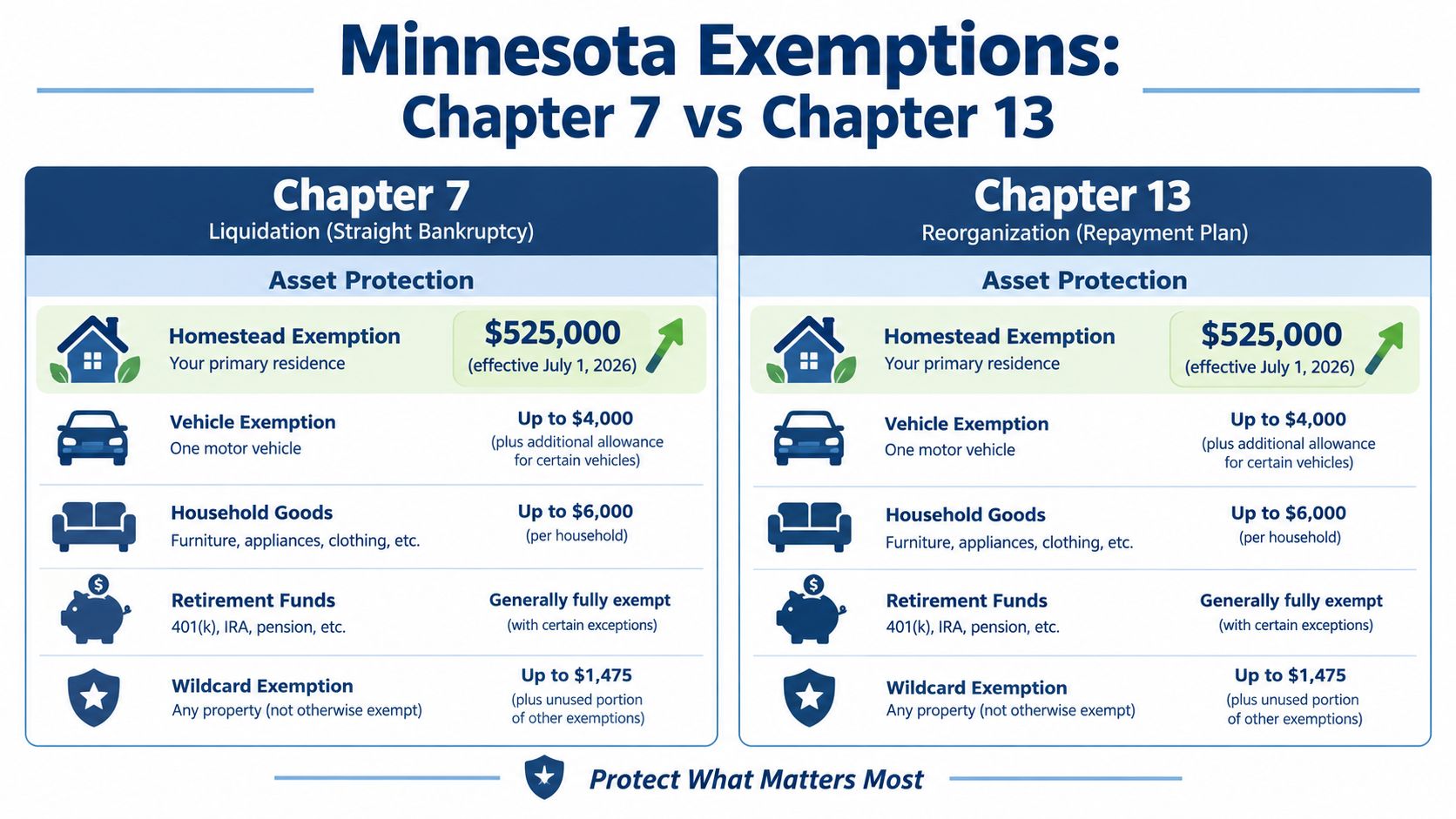
A home with equity above the applicable exemption may require a Chapter 13 payment plan to avoid a Chapter 7 sale analysis. The exemption worksheet therefore belongs near the start of the filing decision, not after the chapter has already been chosen.
How Bankruptcy Affects Credit, Income, and Co-Debtors
A bankruptcy filing shows up on the credit reports, but that's only part of the story. For many Minnesota filers, the bigger effect is that debt pressure comes down enough to make rent, groceries, and transportation possible again. Recent Minnesota-focused guidance notes that many people start rebuilding within 12 to 18 months after discharge and may see scores move into a healthier range faster than they could by trying to keep up with unmanageable debt.
Credit and housing
A Chapter 7 or Chapter 13 filing appears on the major credit reports, and lenders can see it. Landlords can see it too, which is why deposits and screening outcomes often change after bankruptcy. That doesn't mean housing is off the table, it means the filer has to show stability, paid rent, and a workable post-filing budget.
Credit damage matters, but cash-flow relief matters more. A household that can finally pay on time usually has a better rebuilding path than one trying to salvage a score while missing every due date.
Income and garnishment
Minnesota wage garnishment rules are part of why the automatic stay matters so much. Once a case is filed, an existing garnishment usually has to stop, and Minnesota law also recognizes a garnishment ceiling tied to disposable earnings. For a worker living paycheck to paycheck, that pause can be the difference between keeping the lights on and falling further behind.
Co-debtors and joint liability
Chapter 7 and Chapter 13 treat co-signed debt differently. In Chapter 7, the stay protects the filer, but the co-signer can still be pursued unless the creditor's rights are otherwise limited. In Chapter 13, consumer co-debtors get added protection through the co-debtor stay, which can matter a lot when a parent, spouse, or friend signed a loan to help.
| Effect Area | Chapter 7 | Chapter 13 |
|---|---|---|
| Credit reporting | Filing appears on the report for years | Filing appears on the report for years |
| Housing | Landlords may tighten screening | Landlords may tighten screening |
| Income pressure | Existing garnishments usually stop | Existing garnishments usually stop |
| Co-signer risk | Co-signer can still be pursued | Co-debtor stay can protect on consumer debt |
| Rebuilding path | Often faster after discharge | Often steadier during the plan |
For readers who want a broader recovery plan after filing, post-bankruptcy credit rebuilding with Superior Credit Repair offers a structured way to think about the next stage without pretending the filing disappears overnight.
Debts Bankruptcy Does and Does Not Discharge
A Minnesota filer may stop collection pressure through the automatic stay, yet still owe part of the debt after the case. The stay pauses collection first. The discharge then determines which personal obligations end and which continue. Those are separate steps, and confusing them can lead to costly decisions.
Debts that usually go away
In a successful bankruptcy case, ordinary unsecured debts such as credit cards, medical bills, personal loans, old utility arrears, and deficiency claims are commonly discharged. For a household deciding whether to file after Minnesota's July 1, 2026 exemption increases, that discharge analysis belongs beside the property analysis. The updated exemptions may affect what the filer can keep, while the discharge determines which qualifying debts no longer require payment.
Bankruptcy often clears a large share of the consumer debt competing for the household's income. It does not turn every financial obligation into a clean slate.
Debts that usually survive
Recent income taxes, student loans absent undue hardship, most domestic support obligations, DUI-related restitution, and debts connected to fraud or willful injury receive different treatment. Secured debt also survives to the extent a lien remains attached to property. A filer may discharge personal liability while the lien continues, unless bankruptcy law allows that lien to be avoided.
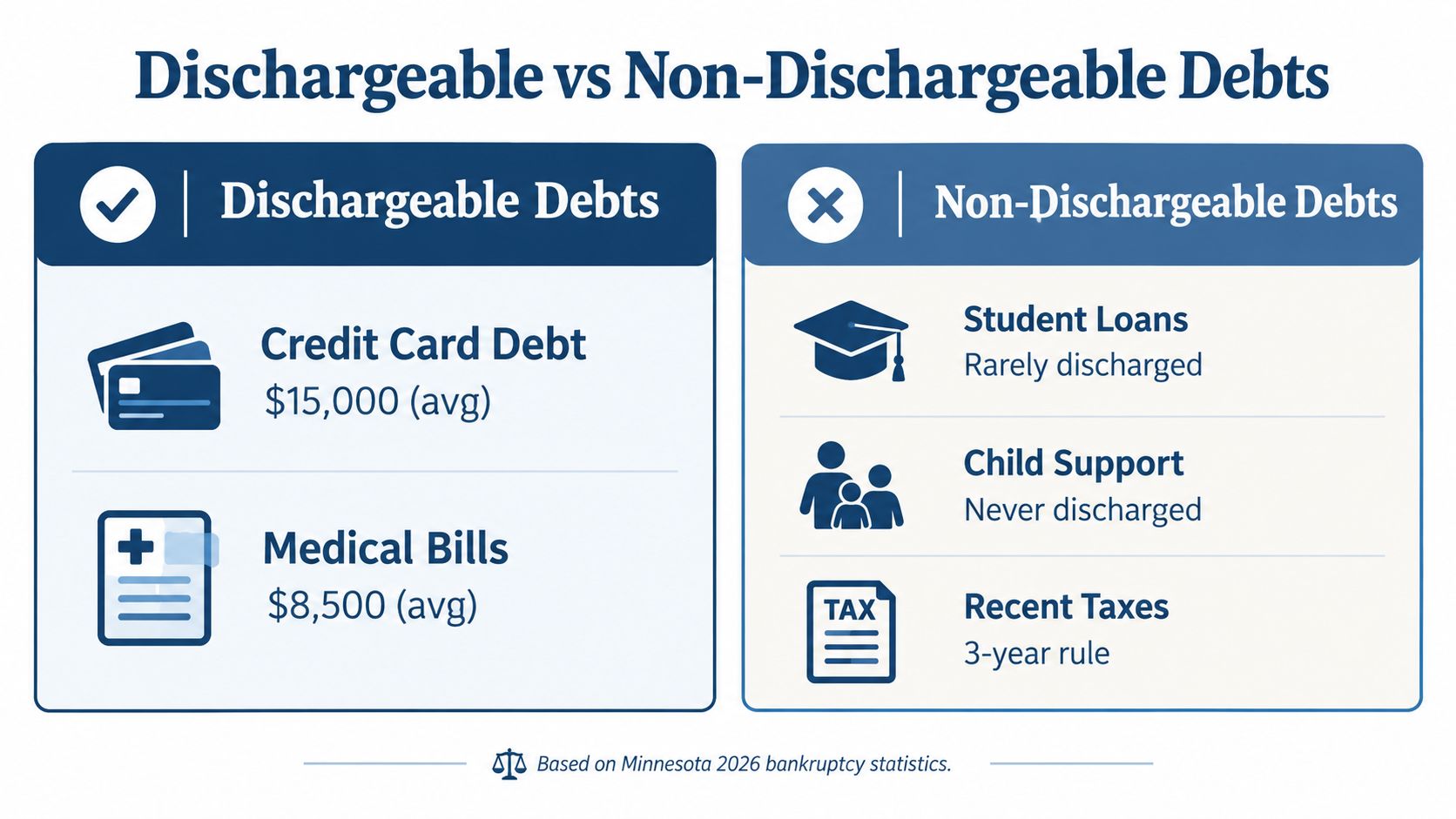
The practical distinction is simple: ordinary consumer debt often fits the discharge, while support, certain taxes, student loans, and secured liens require separate planning. Chapter 13 may help by placing arrears into a repayment plan and, after completion, improving treatment of some tax or student-loan issues. The goal is to match the filing chapter to the debts that need relief and the obligations that still need a plan.
Common Minnesota Bankruptcy Myths Worth Debunking
Minnesota bankruptcy decisions depend on current state rules, not national shorthand. The July 1, 2026 exemption increases can change whether filing protects a home, vehicle, or cash, so a filer should test the numbers before assuming the worst.
Five myths that keep people stuck
-
“You lose everything.” Exemptions can protect qualifying property. A Minnesota homestead, vehicle, and cash may remain with the filer when equity fits within the applicable limits, including the updated homestead rules (Minnesota Department of Commerce). The practical question is equity, not whether the filer owns property.
-
“Filing ruins credit forever.” Bankruptcy affects credit, but it does not prevent future credit decisions for life. Recovery depends on accurate reporting, steady income, and current payments after filing. A filer should treat discharge as a reset point for responsible borrowing, not a promise of an immediate score increase.
-
“You can't file again for years.” Repeat-filing rules depend on the earlier chapter, the new chapter, and whether the first case produced a discharge. Timing needs a case-specific review before someone assumes another filing is unavailable.
-
“Only irresponsible people file.” Medical bills, job loss, reduced hours, and a sudden household emergency can overwhelm a careful budget. Bankruptcy addresses the numbers after the crisis, not a person's character.
-
“Waiting can't hurt.” Garnishment, foreclosure deadlines, repossession risk, and judgment interest may continue while a household delays. Waiting can also reduce choices about chapter selection and Minnesota exemptions.
Delay can cost options. A timely review helps connect the July 1, 2026 exemption changes to the filer's home equity, paycheck, car, and creditor deadlines.
Rebuilding After Discharge in Minnesota
A Minnesota filer who receives a discharge on Monday still has practical work to do on Tuesday. The first 90 days are a cleanup period: credit reports may need corrections, discharged balances must be coded accurately, and the household budget needs protection from another emergency. The July 1, 2026 exemption increases may have helped preserve a home, vehicle, or cash during the case, but keeping that stability requires consistent decisions after discharge.
A practical recovery checklist
- Check all three credit reports: Confirm that discharged accounts are marked as included in bankruptcy and show no remaining balance.
- Dispute errors fast: If a discharged debt still appears active or lists money owed, send a dispute promptly under the FCRA process.
- Start a secured credit path: A small secured card can establish payment history while limiting the risk of taking on unaffordable debt. For a structured plan for the months after discharge, see post-bankruptcy credit rebuilding with Superior Credit Repair.
- Protect housing stability: Pay rent or the mortgage, utilities, and insurance on time. Those accounts support daily stability while credit scores recover.
- Build a small cash buffer: A modest reserve can help cover a car repair or medical bill without returning to high-cost borrowing.
Recovery works like rebuilding a bridge one reliable payment at a time. Lenders, landlords, and future creditors look for consistent conduct after discharge, not a perfect score immediately.
LifeBack Law Firm, P.A. offers a free 90-day Post-Bankruptcy Program that includes judgment removal assistance and support from a dedicated specialist. The program can help address post-discharge questions, account-coding corrections, and practical recovery tasks. Before a future bankruptcy filing, Minnesota residents should also confirm which approved credit counseling providers satisfy the §109(h) requirement.
LifeBack Law Firm, P.A. handles Minnesota Chapter 7 and Chapter 13 cases, explains exemption choices, and supports the steps after discharge. A filer can use the July 1, 2026 exemption changes as a planning reference, then review how those rules affect the home, paycheck, credit reports, and co-signed debts with counsel.