
Filing a Minnesota bankruptcy petition triggers an automatic stay under 11 U.S.C. § 362 that immediately halts most judgment enforcement such as garnishments, levies, and collection calls. The stay pauses enforcement rather than erasing the judgment, and a separate post-discharge Minnesota filing under Minn. Stat. § 548.181 is often required to clear the judgment from the court record.
That distinction decides whether relief lasts. A filing can stop the next paycheck deduction, but lasting freedom from the debt depends on discharge, lien treatment, and cleanup of the state court record.
When a Minnesota Judgment Hits Your Paycheck or Bank Account
A judgment stops feeling abstract when payroll sends a garnishment notice or a bank freezes an account before rent clears. The creditor already won in court, and enforcement turns that win into money taken from wages or deposits. For many Minnesota households, that moment raises one urgent question about whether can a bankruptcy stop a judgement in Minnesota quickly enough to matter.
The short answer is yes for most ordinary collection judgments, but only in stages. Filing creates immediate protection, discharge later addresses personal liability, and a separate Minnesota procedure may be needed to clear the record. Treating those stages as one event leads to bad decisions.
What Enforcement Looks Like in Practice
Consider a wage earner who fell behind on a credit card after a medical problem, ignored collection letters, and then received a garnishment notice at work. The judgment creditor doesn't need fresh permission each payday because the garnishment process is already moving. A bank levy creates a different panic because funds for utilities, food, and a car payment can become unavailable at once.
- Wage garnishment: Future deductions become the immediate threat, especially when the next payday is close.
- Bank restraint or levy: Access to deposited money becomes the problem, even before ownership disputes get sorted out.
- Sheriff enforcement: A levy notice signals that the creditor has moved from demanding payment to taking property through legal process.
Under 11 U.S.C. § 362(a), a bankruptcy petition creates an automatic stay that applies to collection actions against the debtor or bankruptcy estate, and the Minnesota Attorney General guidance on the automatic stay states the stay can immediately halt wage garnishment, debt collection, foreclosure, repossession, utility disconnection, and creditor harassment. That protection explains why timing matters more than debating the fairness of the underlying bill. A debtor facing active deductions should get the garnishment papers reviewed before another pay cycle closes, and background on how wage garnishment works in Minnesota helps frame the urgency.
Practical rule: Stopping collection is the first job. Erasing personal liability and clearing the judgment record are separate jobs that happen later.
The filing date becomes the critical line. Money already taken, liens already created, and actions already completed may raise different issues from enforcement scheduled after filing. A careful review separates what bankruptcy can stop now from what requires additional motions or state court cleanup later.
How the Automatic Stay Stops Judgment Enforcement
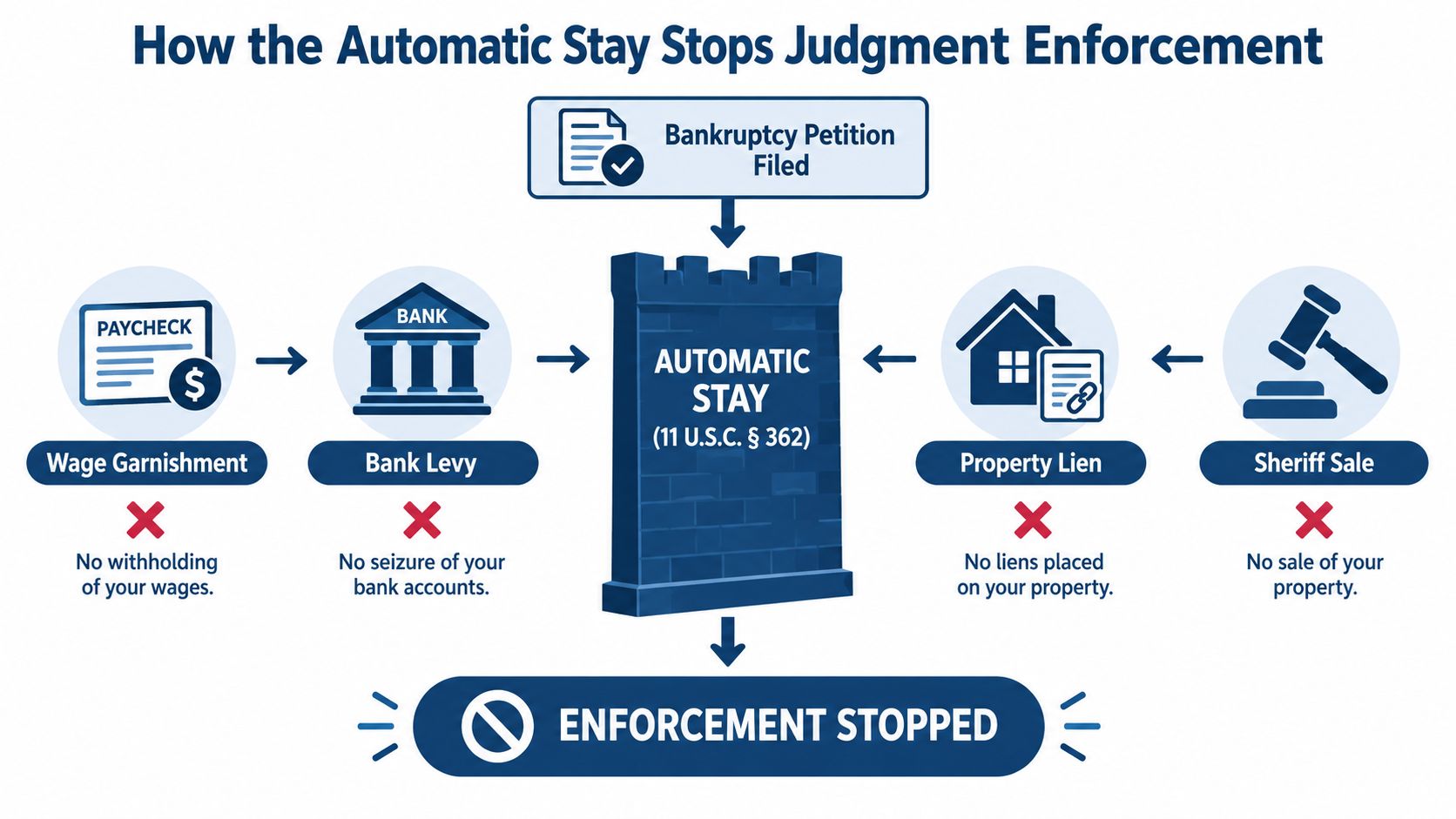
The automatic stay works like a legal wall that drops into place when the petition is filed. It isn't a favor from the creditor and it doesn't depend on the state court judge agreeing to pause the case. Federal law imposes the pause, and the creditor generally must route further efforts through bankruptcy court.
Filing a Minnesota bankruptcy petition generally triggers the federal automatic stay immediately and without a separate court order, halting continuing lawsuits, wage garnishments, bank-account restraints, and other enforcement actions against the debtor or bankruptcy estate, as described in the federal courts overview of Chapter 7 bankruptcy basics. That immediacy is the point. A debtor doesn't file and then wait for a hearing before protection starts.
Enforcement the Stay Commonly Halts
For a typical money judgment, the stay reaches the tools creditors use to turn paper into payment. It generally stops a pending collection lawsuit from moving forward, prevents new garnishment deductions, and blocks efforts to levy accounts or property. Collection calls and letters tied to the debt also must stop.
- File the petition: The petition date starts the stay in most consumer cases.
- Give notice fast: The case number and filing notice should go to the creditor, creditor's attorney, employer, garnishment processor, bank, or sheriff involved.
- Document contact: Records of post-filing calls, deductions, or restraints help counsel address a violation quickly.
Notice isn't a technical nicety. Payroll departments and sheriffs act on paperwork, and a delay in delivering the case number can mean another deduction gets processed before systems update. Debtors who want detail on local application can review how the automatic stay law works in Minneapolis, but the operational step remains simple: notify every party doing the taking.
A Pause Is Not a Cancellation
The stay is procedural protection, not a finding that the debt never existed. A creditor can ask bankruptcy court for relief from the stay, which means permission to proceed despite the filing. Statutory exceptions and repeat-filer rules can also limit protection in specific cases.
That limit shouldn't discourage a debtor with an ordinary credit card or medical judgment. It should shape expectations. The stay buys the space for discharge or a repayment plan to do the lasting work, and ignoring the case after filing wastes that space.
What the Discharge Actually Does to a Judgment Debt
A discharge changes personal liability. It doesn't automatically rewrite every property record connected to the judgment. That split surprises homeowners who assume a discharge order clears title the same way it stops collection calls.
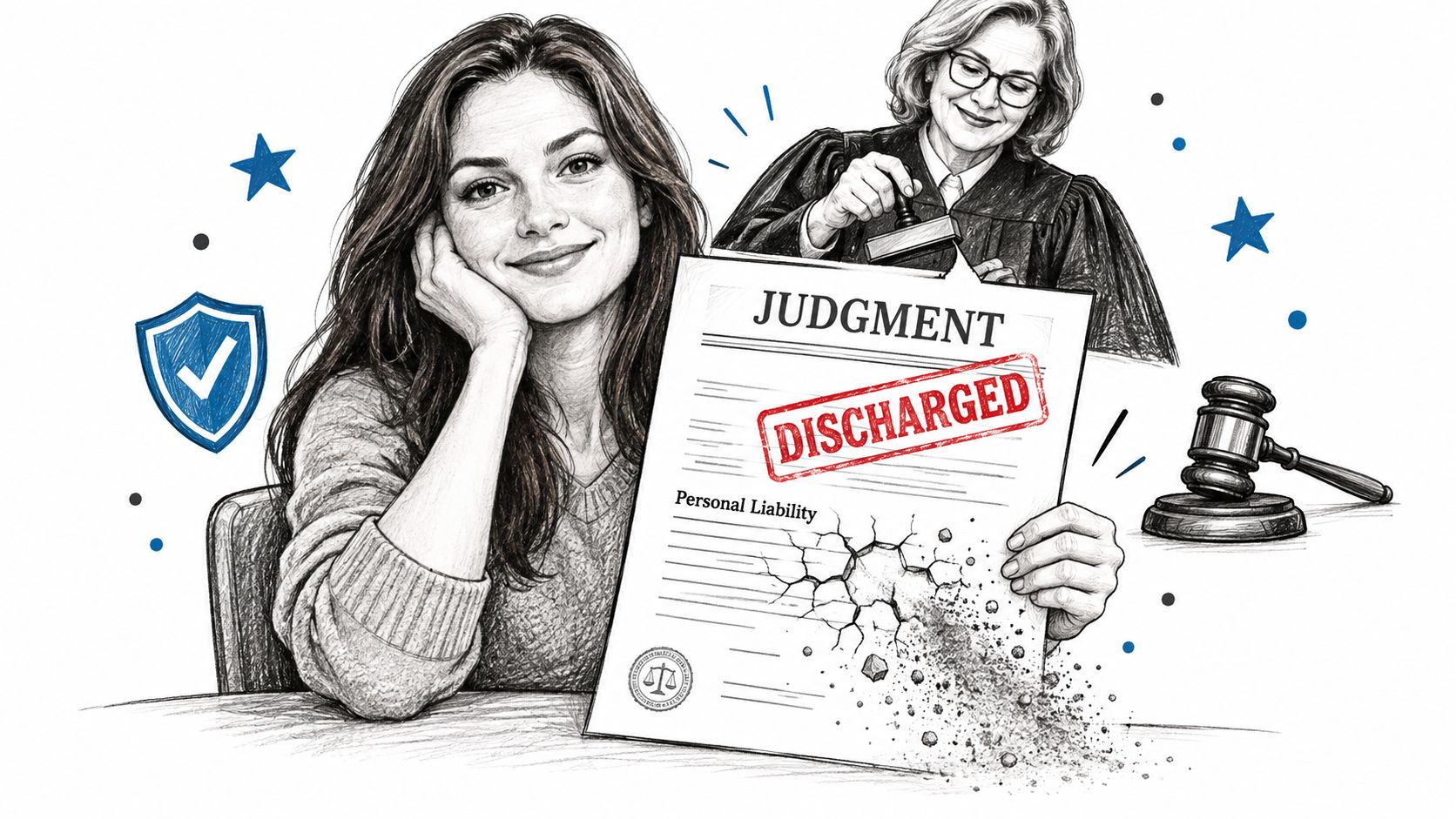
Section 524(a) provides that a discharge voids a judgment to the extent it determines the debtor's personal liability for a discharged debt and enjoins collection of that debt as a personal obligation, and a federal bankruptcy court explanation of judgment liens riding through bankruptcy notes that valid prepetition judgment liens generally "ride through" bankruptcy and may remain enforceable against property after discharge. In plain terms, the creditor can't chase the debtor personally for a discharged debt, but a surviving lien can still affect property.
The Three Stage Framework
- Stay at filing: Collection pauses so the bankruptcy case can proceed without a race to grab assets.
- Discharge later: Qualifying personal liability gets eliminated, and the creditor is barred from collecting that debt from the debtor personally.
- Lien analysis: A judgment lien against real estate or other property may need separate avoidance or other treatment.
Chapter 7 and Chapter 13 reach discharge differently. Chapter 7 aims at a comparatively direct discharge of qualifying debts without a repayment plan. Chapter 13 uses a court supervised plan first, with discharge tied to plan performance and the treatment of claims inside that plan.
For a renter with no real estate and a dischargeable credit card judgment, discharge may resolve the practical problem once record cleanup is handled. For a homeowner with a recorded judgment lien, discharge alone may leave a title problem that surfaces during a sale or refinance. The difference isn't a minor detail. It's the reason property records, exemption choices, and lien status belong in the first consultation, not after discharge.
Rebuilding also needs realistic planning after personal liability ends. Readers comparing post-bankruptcy credit issues internationally may find the Freedom Cars bankruptcy credit guide useful context on rebuilding after insolvency, while Minnesota judgment relief still turns on federal discharge law and state record procedures. Credit recovery doesn't fix a surviving lien. Legal cleanup does.
Clearing the Judgment From Minnesota Court Records
A federal discharge doesn't automatically make the Minnesota state court judgment disappear from the record. That leftover record can confuse landlords, lenders, title companies, and background check reviewers long after personal liability ended. Minnesota law provides a specific cleanup route, and skipping it is a common unforced error.
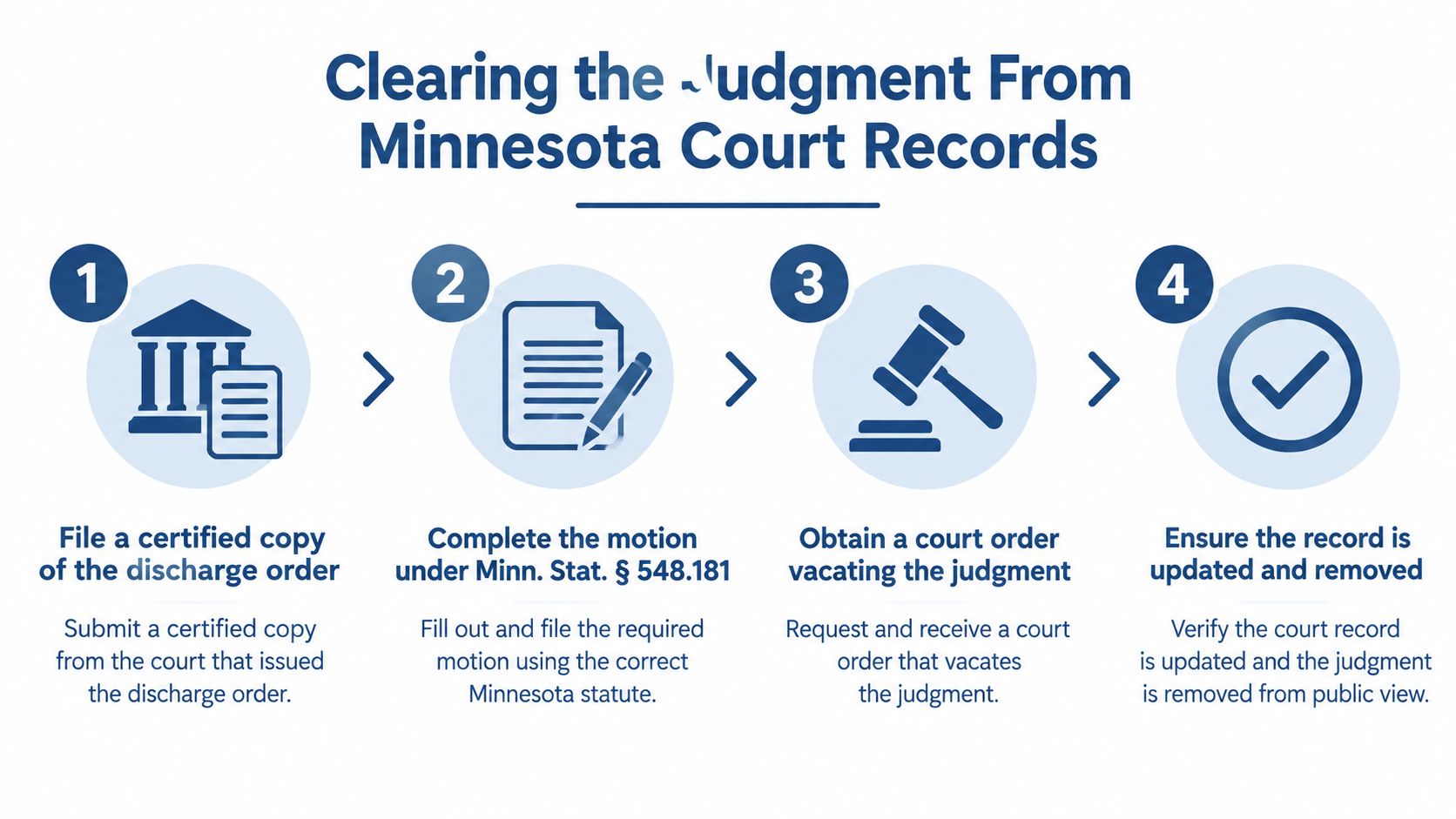
Minnesota Statutes § 548.181 provides a post-discharge procedure: after paying a $5 filing fee per judgment and supplying a certified discharge or bankruptcy-court certificate, the debtor may apply to the relevant court administrator to discharge judgments covered by the bankruptcy discharge, and a creditor generally has 20 days after service to object, under the Minnesota statute governing discharge of judgments after bankruptcy. The fee is small compared with the cost of explaining a stale judgment during a housing or title transaction. The steps still must be done correctly.
The Section 548.181 Process
- Get proof of discharge: A certified copy or bankruptcy court certificate shows the debt falls within the discharge.
- Apply with the court administrator: The application targets each judgment covered by the discharge in the relevant Minnesota court.
- Serve the creditor: Service starts the objection window and gives the creditor a chance to raise a valid ground.
- Confirm the record changed: A debtor shouldn't assume the public record updated without checking the court file.
A creditor objection isn't supposed to be a second chance to collect a discharged debt. The court must exclude a judgment if the underlying debt wasn't discharged or if the judgment remained an enforceable lien on real property when discharge entered. If a lien affects only some real estate, the discharge of record applies only to property not subject to that lien.
When Lien Avoidance Belongs in the Bankruptcy Case
Section 522(f) can allow avoidance of an eligible judicial lien when it impairs an exemption. That's bankruptcy court work, distinct from the later Minnesota record application. A homeowner with exempt equity burdened by a judicial lien should raise avoidance during the case, not hope discharge handled it.
A discharged debt can still create a title headache if nobody clears the state record or addresses a surviving lien.
Debtors who already received a Chapter 7 discharge can compare next steps in the guide on getting rid of judgments after a Chapter 7 discharge. The recommendation is direct: finish the cleanup. A fresh start that leaves an apparently active judgment in court records isn't finished.
Exceptions That Let Creditors Keep Collecting
Not every judgment receives the same treatment. The underlying obligation controls dischargeability, and the label "judgment" doesn't convert a protected debt into an ordinary credit card balance. A debtor who files without sorting the debt category can stop collection temporarily and still owe the money afterward.
A creditor can ask the bankruptcy court for relief from the stay, and statutory exceptions or repeat-filer rules may limit or terminate protection, with garnishment creating another timing issue because Minnesota law gives a creditor a perfected lien in garnished disposable earnings or other attached property from service of the garnishment summons, as noted in bankruptcy court guidance on automatic stay protection for creditors. Timing therefore matters twice: before filing, when liens may attach, and after filing, when exceptions may narrow the stay.
Judgments That Need Closer Review
- Domestic support obligations: Child support and similar family support duties receive special treatment and shouldn't be grouped with consumer collection judgments.
- Fraud based claims: A judgment tied to alleged fraud, false pretenses, or similar misconduct can face a dischargeability fight.
- Willful and malicious injury: Claims based on intentional harm raise different issues from inability to pay a bill.
- Certain tax and student loan obligations: These categories often survive unless a specific legal basis for discharge exists.
- Secured or lien based rights: Personal liability and property enforcement remain separate questions.
The complaint and judgment language matter. A creditor may plead ordinary breach of contract, or the pleadings may allege conduct that points toward nondischargeability. Counsel should read the actual judgment, not rely on a debtor's shorthand description of the case as "an old bill."
Repeat Filings and Stay Relief
Prior dismissed cases can complicate the stay in a new filing. A repeat filer shouldn't assume the same protection will last the same way, and urgency increases when a garnishment or foreclosure is already scheduled. Secured creditors also have stronger arguments for stay relief when collateral isn't being paid for or protected.
None of these exceptions makes bankruptcy useless. They make triage essential. The right question isn't whether bankruptcy stops every judgment forever. The right question is whether the specific judgment is dischargeable, whether a lien attached, and whether any exception lets that creditor keep moving.
Chapter 7 vs Chapter 13 for Judgment Debtors in Minnesota
Chapter choice should follow income, property, lien exposure, and the reason enforcement is happening. Both chapters generally trigger the stay at filing, so either can interrupt a garnishment. They differ in how the judgment debt gets resolved after that immediate pause.
Chapter 7 is usually the cleaner route for a qualifying debtor whose main problem is dischargeable unsecured judgment debt. It doesn't use a repayment plan, and discharge can eliminate personal liability without paying the judgment creditor through a plan. Liens and Minnesota record cleanup still require separate attention.
Chapter 13 fits a different profile. A debtor with regular income who needs to catch up on secured obligations, protect property that Chapter 7 can't protect as well, or manage debts through a structured plan may benefit from the longer framework. Judgment creditors get treated through the plan according to claim type and priority, rather than continuing state court enforcement.
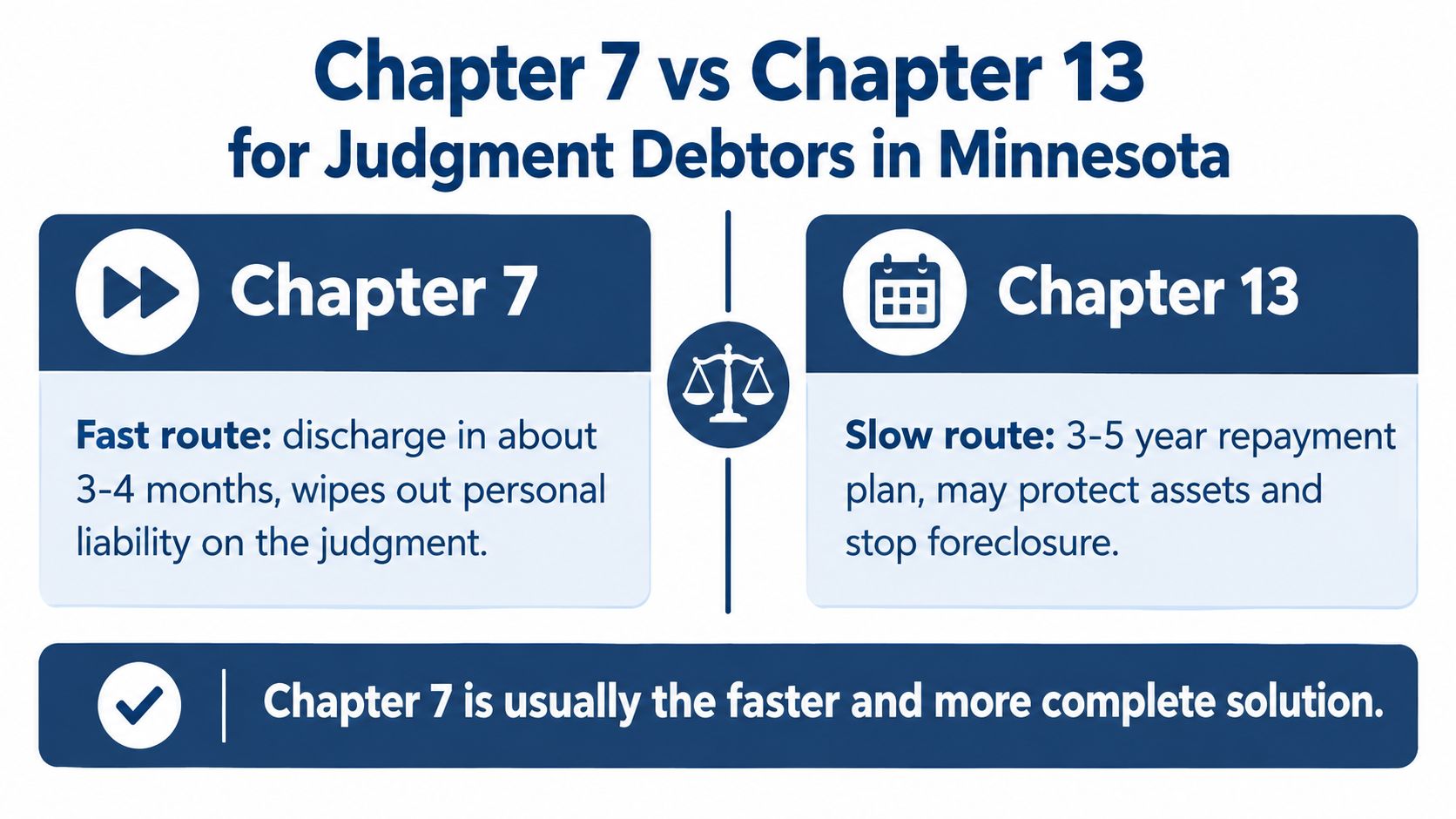
| Factor | Chapter 7 | Chapter 13 |
|---|---|---|
| Immediate stay | Generally starts at filing | Generally starts at filing |
| Judgment treatment | Discharge can eliminate personal liability for qualifying debts | Claims are handled through a repayment plan before discharge |
| Lien handling | Eligible judicial lien avoidance may be needed | Plan treatment and lien issues are addressed within the case structure |
| Best fit profile | Qualifying debtor focused on dischargeable unsecured judgments | Debtor with income who needs time, arrears management, or broader property protection |
| Record cleanup | Minnesota post-discharge procedure may still be needed | Minnesota post-discharge procedure may still be needed |
Choosing Without Guesswork
A wage earner facing a credit card judgment, with exempt property and qualifying income, often gains little from stretching the case into a plan. Chapter 7 addresses the personal liability directly. A homeowner behind on a mortgage while also facing judgment enforcement may need Chapter 13 because the house problem, not just the judgment, drives the strategy.
Decision point: The fastest chapter isn't automatically the right chapter when real estate, arrears, or nondischargeable debt sits inside the same case.
Debtors shouldn't choose based on fear of the word liquidation or a preference for repayment. Exemptions decide much of the property analysis, and lien status decides whether discharge alone solves the judgment problem. A chapter recommendation made before reviewing the judgment, title position, income, and prior filings is guesswork dressed up as advice.
Filing in Minnesota and What Happens Right After
Minnesota consumer bankruptcy cases are filed in federal bankruptcy court for the District of Minnesota. The state judgment may sit in a Minnesota county court file, but bankruptcy protection comes from the federal petition. That separation explains why both systems matter: federal court stops enforcement and grants discharge, while Minnesota court records may need later cleanup.
Preparation starts with documents, not optimism. The judgment, garnishment notice, bank levy papers, recent pay information, tax records, property information, and a complete creditor list shape eligibility, exemptions, and lien strategy. Missing a judgment creditor from notice lists creates avoidable friction at exactly the moment speed matters.
Immediate Steps After Filing
- Send the case number everywhere enforcement is happening: Creditor counsel, employer payroll, garnishment processors, banks, and sheriffs need usable notice.
- Check the next paycheck: A debtor should confirm whether a deduction stopped or whether a pre-filing withholding already moved through payroll.
- Preserve post-filing records: Letters, call logs, bank notices, and pay stubs help counsel respond if collection continues.
- Attend required case events: The meeting of creditors and trustee requests aren't optional paperwork.
If collection continues after notice, the response shouldn't be an argument with a collector. Counsel can contact the creditor, demand compliance with the stay, and seek bankruptcy court intervention when needed. Funds withheld after the petition date deserve prompt review because delay can complicate recovery efforts and household budgeting.
Making the Filing Practical
LifeBack Law Firm, P.A. is one Minnesota option for debtors evaluating Chapter 7 or Chapter 13, including matters involving lawsuits, garnishments, and post-discharge judgment cleanup. The firm describes $0 up-front Chapter 7 filings and virtual process options, which can matter when a garnishment has already drained cash reserves. Any firm selection should still turn on a direct review of the judgment, dischargeability, exemptions, and lien exposure.
The strongest filing plan answers four questions before the petition date: what enforcement must stop first, who needs notice, whether the debt is dischargeable, and whether a lien survives. A debtor who gets those answers early avoids the common trap of stopping a garnishment while leaving a record or title problem untouched.
A Minnesota debtor facing garnishment, a bank levy, or a judgment lien can get the judgment papers, dischargeability issues, and Chapter 7 or Chapter 13 options reviewed before the next enforcement step lands. LifeBack Law Firm, P.A. offers Minnesota bankruptcy consultations, virtual filing options, and post-bankruptcy judgment cleanup guidance for households ready to act.