
A kitchen table covered with unopened envelopes, a phone lighting up with collection calls, and a consultation booked for tomorrow. That's where many Minnesota and North Dakota families start, unsure what to bring to bankruptcy consultation and worried about being judged for missing paperwork. A calmer outcome is possible. When the right records arrive in a simple packet, the attorney can often answer Chapter 7 vs Chapter 13, payment, and timing questions during that first meeting instead of sending the debtor home with homework.
This list shows what to gather, why a trustee needs it, and what to do when something is missing. Federal paperwork covers assets, liabilities, income, expenses, creditors, and financial history, and the official forms include schedules for property and debts plus a statement of financial affairs described in the federal court guidance on Schedules A/B through J and the summary. Because those forms are signed under penalty of perjury, records beat estimates every time. Debtors in Minneapolis-St. Paul, Fargo, Duluth, or a smaller community can use the same packet in person, by phone, or by video, and LifeBack Law Firm can review what's available fast while flagging the few gaps that matter most.
1. Government-Issued Photo ID and Social Security Number Proof
Identity verification comes first because nothing can be filed under the wrong name or number. A valid, unexpired government-issued photo ID, such as a driver's license or state ID, confirms who is filing. Proof of the Social Security number, such as the card itself or an SSA statement showing the full number, confirms the debtor matches court and creditor records.
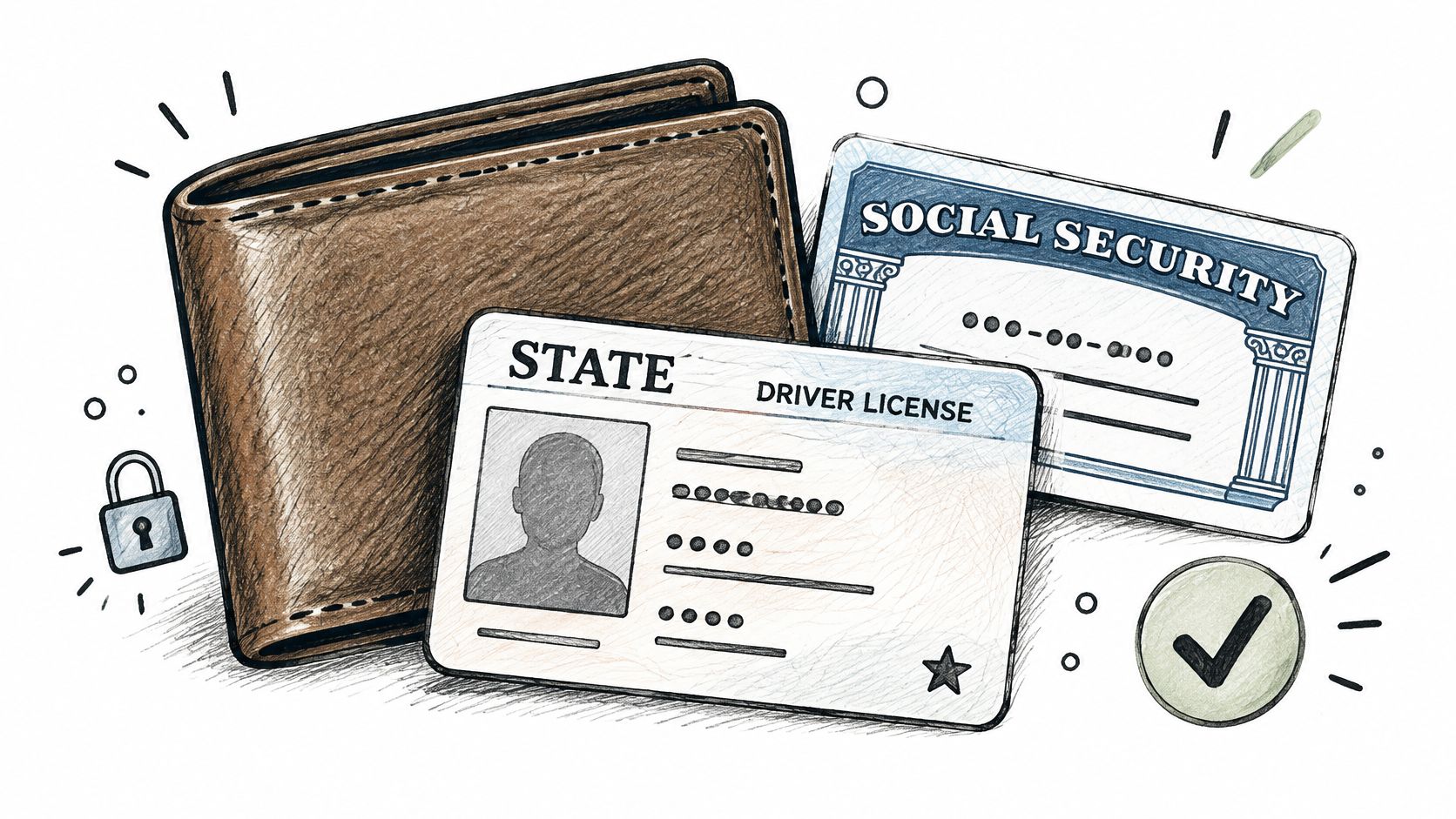
A Minneapolis-St. Paul debtor completing a fully virtual Chapter 7 filing uploads a scanned driver's license and Social Security card during intake, for example. That simple step keeps a remote consultation on schedule and prevents a delay later when the trustee asks for the same documents. A blurry photo or an expired license can slow things down, so clarity matters more than fancy formatting.
Simple Checks Before the Meeting
Small mismatches cause outsized problems. A maiden name on one record, a married name on another, or a transposed digit can trigger questions that take weeks to unwind. Checking names and numbers at home takes minutes and saves real friction.
- Scan Both Sides: Photograph or scan the front and back of the ID so it can be shared securely with the LifeBack team.
- Match Legal Names Exactly: Confirm the legal name on the ID matches Social Security records, letter for letter.
- Flag Name Changes Early: Tell the attorney about marriage, divorce, or other name changes before the consultation begins.
Practical rule: If the ID and Social Security proof don't match, bring both anyway and explain the difference. Hiding a mismatch never helps, and counsel can usually resolve it once it's disclosed.
For phone or video meetings, debtors should ask how the firm wants sensitive documents transmitted and avoid sending a Social Security card through ordinary email if a secure upload is available. That caution protects privacy without delaying help.
2. Recent Pay Stubs and Income Records (Last Six Months)
A Duluth wage earner with fluctuating hours brings six months of pay stubs so the attorney can average the income and compare it to the state median. That average, often called Current Monthly Income, drives the means test. It influences Chapter 7 eligibility and helps set a Chapter 13 plan payment, so a single recent paycheck rarely tells the full story.
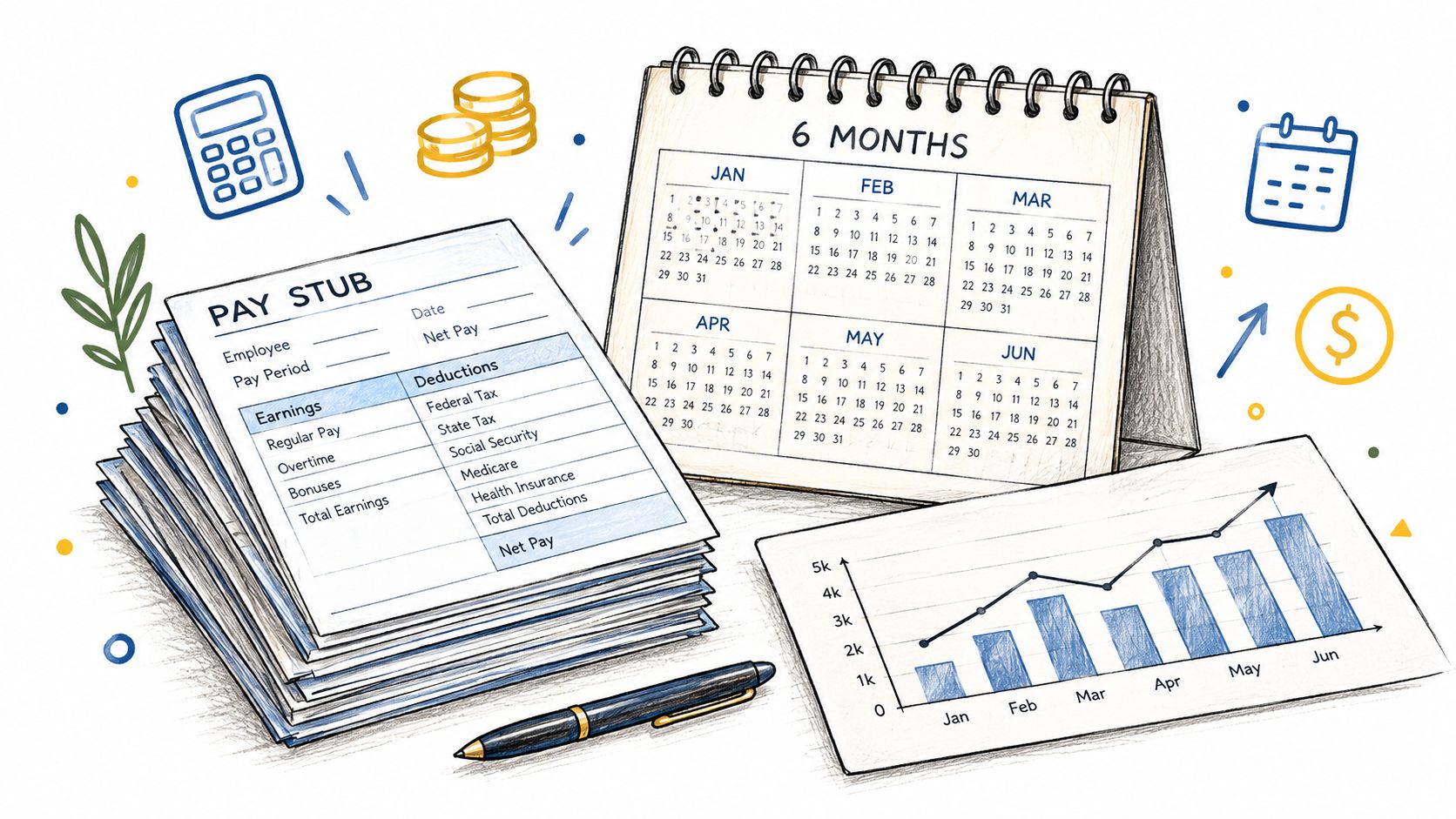
The U.S. Trustee Program explains that Chapter 7 Form 122A-1 and Chapter 13 Form 122C-1 require entry of the median income for the debtor's state and household size, using Census Bureau data updated annually, in its means testing information for cases filed on or after July 15, 2026. Because those tables change, an old pay statement or a prior-year return alone may not establish present eligibility. Household size, income history, and allowable expenses matter, not just the amount of debt.
What Counts as Income Here
Wages are only part of the picture. Overtime, bonuses, commissions, unemployment benefits, Social Security, pensions, support received, self-employment revenue, and recurring contributions from other household members can all affect the calculation. Irregular earners should annotate unusual deposits so counsel can reconcile gross income to bank deposits.
- List Every Source by Month: Note each income source and the month it was received, including irregular or seasonal pay.
- Bring a Household Budget: Show regular expenses such as rent, utilities, groceries, transportation, insurance, and childcare.
- Add Business Records if Self-Employed: Small business owners should bring profit and loss statements for the same six-month period.
Expense records deserve equal care, since rent or mortgage, healthcare, taxes, childcare, and support obligations can affect disposable income. A debtor who documents an income drop, a lost job, or unusually high medical costs gives the attorney a timeline, not just a stack of stubs. That timeline often explains why filing now, rather than last month, makes sense.
3. Federal and State Tax Returns and Tax Notices
Tax returns do more than confirm income. Trustees review them to check for tax debts that may not be dischargeable, spot inconsistencies between stated earnings and filed returns, and identify refunds that may belong to the bankruptcy estate. Debtors should generally bring federal and state returns for the last three years, along with IRS or state revenue notices, refund records, and payment plan letters.
Consider a North Dakota Chapter 13 filer with an IRS installment plan who brings three years of returns and the plan letter. With those papers in hand, the attorney can include the tax debt correctly in the repayment plan instead of guessing at balances or priority status. Without them, the consultation turns into a list of unanswered questions.
Notices and Unfiled Returns
Letters from tax agencies matter even when the balance looks small. A notice may show a lien, a proposed assessment, or a deadline that affects filing timing. Keeping every envelope helps because mailing dates and tax years determine how a debt is treated.
Debtors who haven't filed a required return should say so immediately, since that fact changes the plan and may need attention before a case proceeds. Guidance on tax returns and bankruptcy in Minnesota and what filers need to know can help debtors understand why trustees ask for these records. It's also worth asking how a pending or expected refund should be reported, because spending a refund before discussing it can create avoidable problems.
A missing return isn't a reason to skip the consultation. It's a reason to disclose the gap early so counsel can sequence the fix correctly.
If paper copies are gone, transcripts or copies obtained from a tax preparer can serve as a starting point. The attorney can then explain which official versions will still be needed.
4. Bank and Financial Account Statements
Bank statements tell a story that pay stubs can't. Trustees use them to verify income, confirm balances on the filing date, and locate assets that must be disclosed. Debtors should bring statements for every checking, savings, money market, prepaid, and online payment account held during the last six months, plus any account closed within the last year.
A St. Cloud household with a joint checking account and a credit union savings account gathers six months of statements from both before the consultation, for instance. That complete set lets the attorney trace deposits, separate household contributions from the debtor's own earnings, and spot transfers that need explaining. Bringing only the main account would leave gaps a trustee would later question.
Building a Clean Statement Packet
Organization matters more than volume. One PDF per account or per month, plus brief notes on unusual transactions, makes review faster and reduces follow-up requests. A large deposit from a tax refund, a family loan, or a sold vehicle should be labeled with its source.
- Download Statements as PDFs: PDF files upload cleanly during virtual intake and stay readable for the trustee.
- List Every Account: Include accounts with small balances, dormant accounts, and accounts that are no longer used.
- Pause Unusual Moves: Avoid moving money or paying selected creditors right before the consultation without asking the attorney first.
Closed accounts deserve special attention because trustees often ask what happened to the funds. A short written note explaining a closure, supported by a final statement if available, answers that question in advance. Debtors who bank mainly through phone apps should export full statements rather than screenshots, which often cut off balances, account numbers, or transaction dates that counsel needs to see.
5. Complete Creditor List with Account Statements and Collection Notices
A collection letter may be the only recent record of a debt, while an old statement can reveal who originally issued it. Bring both, along with a list of everyone you owe: credit card companies, medical providers, utility companies, landlords, personal loan lenders, collection agencies, and relatives. These records help counsel confirm each creditor's legal name, mailing address, account number, and balance so the creditor can receive notice.
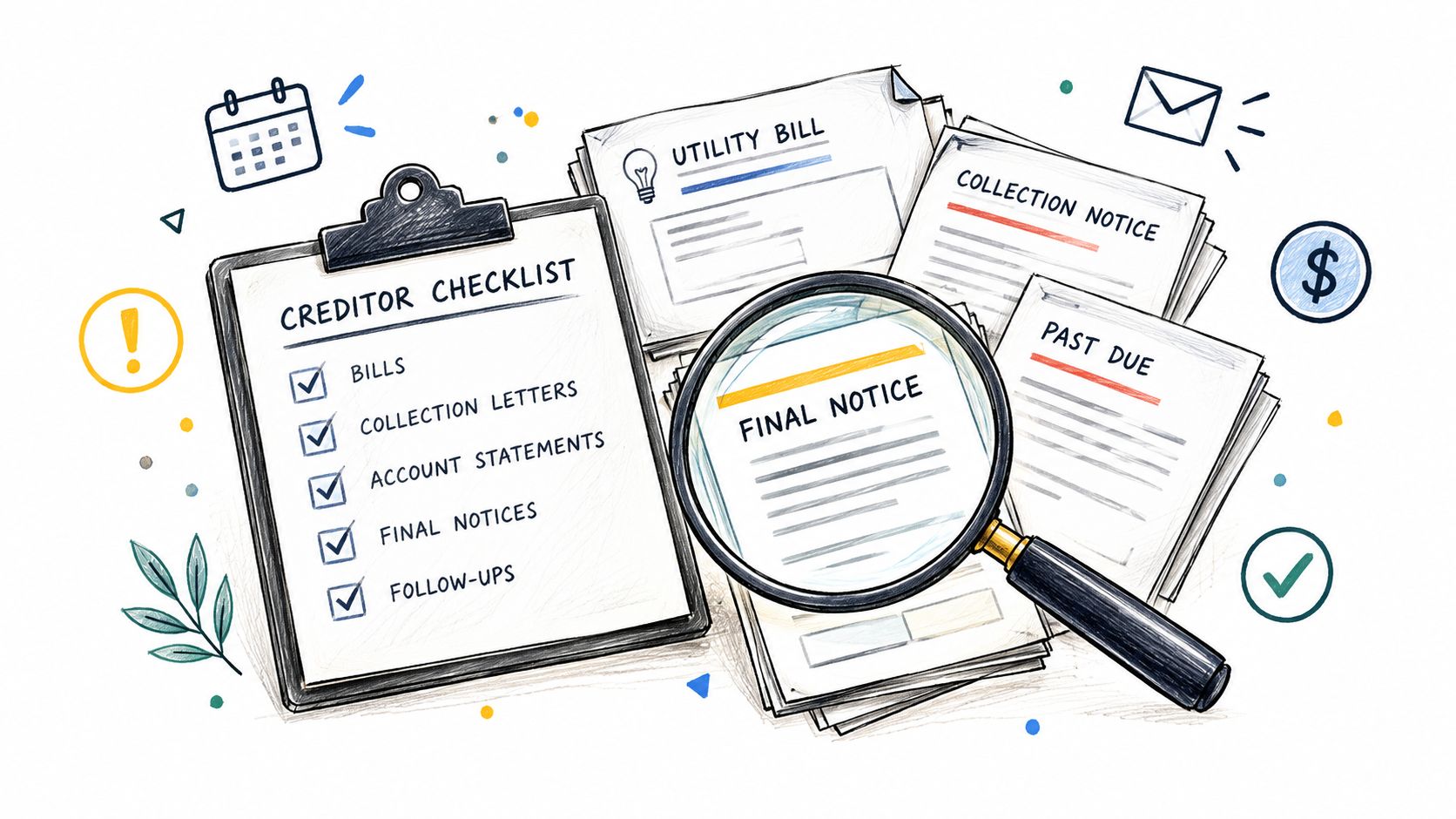
For example, an Eagan resident with medical bills from several providers and credit card debt can bring the statements and collection letters together, making it easier to account for each creditor. Group debts as secured, priority, unsecured, and disputed or contingent. This gives the attorney a clearer starting point for reviewing liens, dischargeability, and exemptions. Add any collateral, co-signers, and the date of the last payment when you know it.
Make Room for Debts That Are Easy to Miss
Old mail, patient portals, and accounts sold to collectors can turn up forgotten balances. If you question whether a collector can prove a debt, read how debt validation works. A disputed debt still belongs on your list; just add a brief note explaining why you dispute it.
Rather than relying on memory, use a working checklist:
- Review your records: Check statements and notices for creditors you may have overlooked.
- Include old medical bills: Bring collection accounts even if you think the balance is wrong or too old to matter.
- Save collection letters and call logs: These help show who is seeking payment and how the debt is being handled.
Include closed accounts, repossessions, tax liabilities, domestic support obligations, and money owed to relatives. A family loan still needs to be disclosed, even if repayment feels informal or personal. Note any recent payments to relatives, too, so the attorney can review them before the consultation. If a document is missing, write down the creditor's name and what you recall, then ask the attorney how to obtain a replacement. For a virtual meeting, keep scans or clear photos of the notices beside your creditor list, and print the list and records as a LifeBack-ready packet if that helps you follow along.
6. Free Credit Reports from the Three Nationwide Credit Bureaus
A credit report is a cross-check, not a complete inventory. Request a free report from each of the three nationwide credit bureaus and compare them: each may show different accounts, balances, payment histories, or collection entries. Bring the reports to the consultation alongside your own records.
For example, a Rochester filer may find an old collection account on one report that is missing from their paperwork. Adding it to the creditor list gives the attorney a chance to address notice before filing. Reports can also reveal duplicate accounts, unfamiliar debts, or errors, including accounts that may belong to someone with a similar name.
Mark What Needs a Closer Look
You do not have to fix every error before meeting with an attorney. Mark unfamiliar accounts, incorrect balances, and accounts shown as open even though they were closed years ago. Add a short note beside each item so the attorney can review it with you. For questions about a debt missing from a report, read what happens when a creditor is not listed on a credit report.
Treat the reports as a working checklist. A real debt may not appear on any report, and a listed debt may still be inaccurate. Keep gathering records even when an account is absent.
If you are meeting virtually, save clear digital copies of all three reports and your notes in one folder. Use a secure method provided by the law firm to share sensitive documents, and keep the originals available in case a page is hard to read onscreen. If you cannot access a report before the appointment, tell the attorney what you tried and bring the creditor records you do have. Missing paperwork is a problem to flag, not a reason to delay the conversation.
Reviewing reports early also gives you a baseline for checking how discharged debts are reported later and spotting inaccuracies as you rebuild credit.
7. Asset, Property, and Vehicle Documents
A mortgage statement, car title, or retirement account summary can change how an attorney assesses what you own and what state exemptions may protect. Bring records that show both value and debt: deeds, recent mortgage statements, vehicle titles, current loan payoff amounts, retirement summaries, and insurance policies. If a document is missing, gather what you can and tell the attorney what you have requested. Estimates are useful, but label them as estimates.
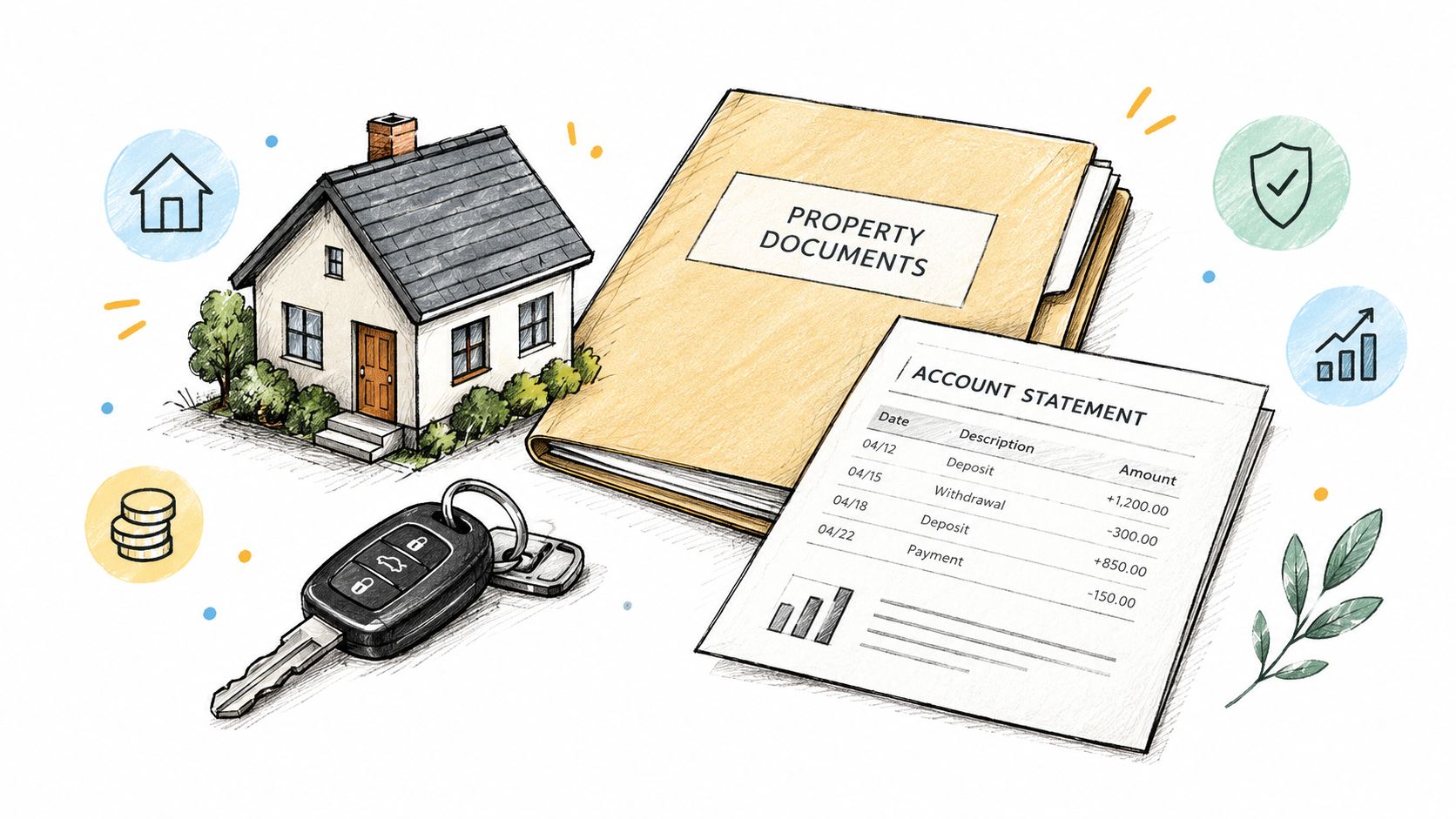
For a Brainerd homeowner, a mortgage statement and property tax notice help counsel assess the home's value and apply the homestead exemption. If the meeting is virtual, take clear photos or scans of each page, including account dates and balances, and keep the originals together for reference. In-person or online, a simple packet labeled “home,” “vehicle,” and “other assets” makes it easier to find records during the conversation.
Include More Than Real Estate
The same disclosure applies to belongings and interests that may not seem significant. Gather records for jointly owned property, business ownership, inheritances, pending claims, tools, equipment, collectibles, investments, and life insurance. Also tell the attorney about recent transfers or payments to relatives. Trustees may review those transactions, so dates and amounts help counsel understand what happened.
For a car, bring its title or registration, the latest loan statement, and a reasonable estimate of its market value. The payoff shows what is owed; the estimated value shows what the vehicle may be worth. These figures help the attorney compare the asset and debt and discuss whether a secured loan might be reaffirmed, redeemed, or surrendered.
Chapter 7 and Chapter 13 cases both require a clear picture of assets, though the records help counsel assess different options under each chapter. Retirement account statements can help the attorney consider protection under applicable state law. The Rhode Island Bankruptcy Court's pro se filer frequently asked questions guidance describes additional documents that may be required beyond the petition, including schedules, statements, disclosures, and certifications. The court's checklist is not a Minnesota or North Dakota rule, but it illustrates why organizing records early helps.
Listing an asset does not mean you will lose it. Disclosure gives counsel the facts needed to assess protection; leaving it off the list can create a much bigger problem.
8. Court Papers, Judgments, Garnishment Records, and Prior Bankruptcy Filings
A summons arrives in the mail, and the hearing date is close. Bring the entire packet to the consultation: the summons, complaint, judgment, and any notice of wage garnishment or bank levy. These papers show what the creditor has done and when action may be needed. A judgment can also create a lien, so understanding what it means when a creditor gets a judgment may help you follow the discussion with your attorney.
For example, a Fargo small business owner who signed a personal guarantee can bring that agreement and the lawsuit summons. The attorney can then assess possible personal exposure alongside the business debt and consider the hearing deadline. If you are meeting virtually, scan or photograph every page, including the backs of documents, and make sure dates and case numbers are readable.
Keep the original envelope, too. Its postmark may help clarify when a notice was sent, while a simple calendar of hearing dates, garnishment start dates, and levies gives the attorney a quick view of urgent issues. If a deadline has already passed, bring the paper anyway. It can still help explain what has happened and what options may remain.
Garnishment records show how much of your income is being withheld, which can inform the budget and help counsel assess whether Chapter 7 or Chapter 13 may fit. Add any foreclosure notices, repossession letters, or eviction papers to the same folder. These documents can signal time-sensitive concerns that ordinary account statements do not show.
Prior bankruptcy paperwork matters as well. Bring any available filing, dismissal, or discharge records, and note the year, court district, and outcome if documents are missing. A prior case can affect whether another filing is allowed and when. If you cannot find the paperwork, tell the attorney rather than guessing; available details can help identify what records to request. For a printable consultation packet, include a dated checklist of these court documents and mark each item as included or unavailable.
8 Essential Documents for a Bankruptcy Consultation
| Item | Preparation Complexity | Resource Requirements | Expected Outcome | Ideal Use / Key Advantage |
|---|---|---|---|---|
| Government-Issued Photo ID and Social Security Number Proof | Low | Current photo ID and Social Security number proof | Identity verified for consultation and filing | Essential for confirming identity and avoiding intake delays |
| Recent Pay Stubs and Income Records (Last Six Months) | Moderate | Six months of records for all income sources | Supports means-test calculations and chapter selection | Useful for assessing eligibility and planning payments |
| Federal and State Tax Returns and Tax Notices | Moderate | Recent federal and state returns, notices, and refund records | Clarifies income history, tax debts, and potential refunds | Helps identify tax obligations and report assets accurately |
| Bank and Financial Account Statements | Moderate to high | Statements for open and recently closed accounts | Shows cash flow, balances, and account activity | Helps disclose assets and identify transactions needing explanation |
| Complete Creditor List with Account Statements and Collection Notices | Moderate to high | Creditor details, balances, statements, and collection records | Supports complete creditor notification and debt classification | Helps avoid omitted creditors and organize collection activity |
| Free Credit Reports from the Three Nationwide Credit Bureaus | Low | Reports from Equifax, Experian, and TransUnion | Helps identify debts, errors, and missing accounts | Provides a free cross-check for the creditor list |
| Asset, Property, and Vehicle Documents | Moderate to high | Property, loan, title, retirement, insurance, and valuation records | Supports asset valuation and exemption planning | Helps assess which assets may be protected or at risk |
| Court Papers, Judgments, Garnishment Records, and Prior Bankruptcy Filings | Moderate | Lawsuit, judgment, garnishment, and prior-case documents | Identifies deadlines, legal exposure, and filing restrictions | Especially useful when lawsuits, collections, or prior filings are involved |
Turn Your Paperwork Into a Fresh Start
Missing one item shouldn't stop anyone from getting help. Standard checklists emphasize pay stubs, tax returns, and bank statements, yet they rarely address gig work, cash tips, seasonal hours, closed businesses, closed bank accounts, or a spouse who won't cooperate. Those situations are common among real filers, and consumer petitions exceeded 540,600 in 2025 and rose 12% from 2024, according to figures summarized in the 2025 BAPCPA report from the United States Courts. A triage approach works better than an all-or-nothing demand.
Debtors can sort the packet into must-have documents, helpful documents, and items the attorney can help obtain. Must-have items include ID, recent income records, court papers with deadlines, and the best available creditor list. Helpful items include older statements, property valuations, and explanations for irregular deposits or transfers. Items the firm can help track down include replacement tax records, creditor addresses, and account statements from closed accounts.
When Records Are Irregular or Incomplete
Variable income needs explanation, not apology. The U.S. Trustee Program describes necessary expenses as those supporting health and welfare or the production of income, and its means testing overview outlines the forms behind those calculations. Chapter 7 debtors may complete Forms 122A-1, 122A-1Supp, and 122A-2 when applicable, while Chapter 13 debtors use Forms 122C-1 and 122C-2. A one-page timeline covering the last six months, noting job changes, medical events, business revenue swings, and household contributions, can be more useful than perfect paperwork with no context.
Privacy and access deserve the same practical attention. Research summarized by UC Berkeley Law reports that women constitute 57% of bankruptcy filers and that single women appear in bankruptcy more than twice as often as single men, as described in the Debt's Grip introduction from UC Berkeley Law. Debtors who share a device, lack reliable broadband, or face financial control at home should ask about phone consultations, secure upload options, and safe mailing arrangements before gathering documents. Remote convenience doesn't reduce the need for complete, truthful information about joint property, household income, and debts, but it can make gathering that information safer.
A printable LifeBack-ready packet can be assembled in an evening with labeled folders for identity, income, taxes, bank statements, creditors, credit reports, assets, and court papers. Debtors who list what they couldn't find, rather than guessing, give counsel a clear gap list to close. LifeBack Law Firm, P.A. supports that process with virtual intake, phone, video, and in-person consultations across Minnesota and North Dakota, $0 up-front Chapter 7 options where available, and a free 90-day Post-Bankruptcy Program after filing. Gathering what's available today, writing down what's missing, and booking that consultation turns a pile of paperwork into the first step of a clear, workable fresh start.
Gather the documents available today, note the gaps as they are, and schedule a phone, video, or in-person consultation with LifeBack Law Firm, P.A. to turn that packet into a Chapter 7 or Chapter 13 plan. The team serves Minnesota and North Dakota statewide, offers virtual intake and 24/7 live chat support, and helps clients move from consultation through discharge and into post-bankruptcy rebuilding with confidence.