
A Minneapolis wage earner can be current on rent yet still fall behind on a mortgage, car loan, medical bills, and credit cards after one stretch of reduced hours. Creditor calls continue, a foreclosure or repossession notice arrives, and the household budget has no room for another surprise. Chapter 13 can create a court-approved route to catch up while protecting essential assets, but filing alone doesn't make the plan work.
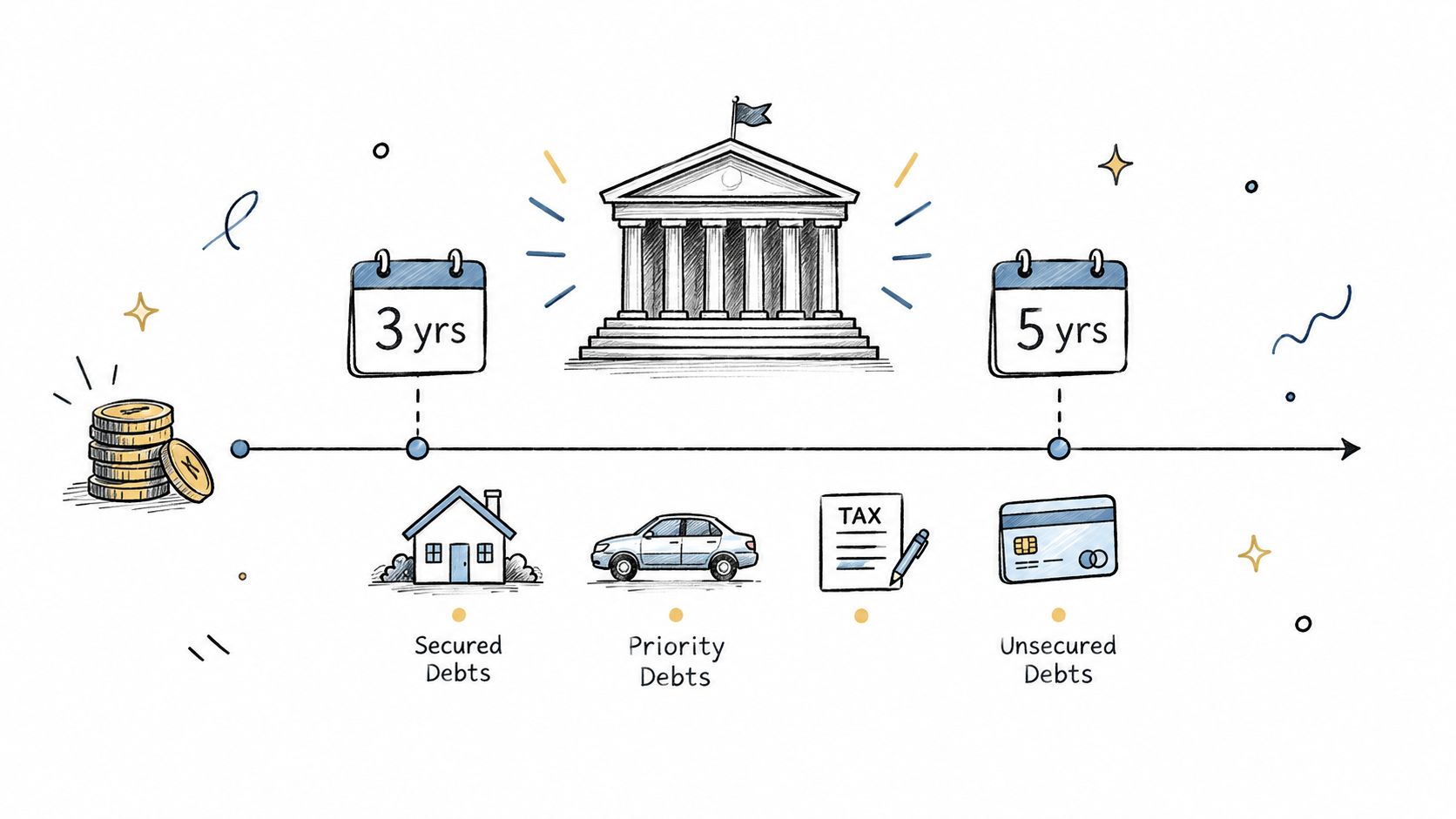
Success depends on understanding the repayment structure, protecting the money reserved for trustee and secured payments, responding quickly when income or expenses change, and completing every court requirement. Chapter 13 typically lasts three to five years, and the U.S. Courts explains that filers must make regular trustee payments while living on a fixed budget for that extended period (Chapter 13 Bankruptcy Basics).
The following Chapter 13 tips and tricks follow the full case lifecycle for Minnesota and North Dakota filers, from plan design and the meeting of creditors through hardship changes, discharge, and post-bankruptcy recovery. Local practice, household income, assets, deadlines, and the treatment of particular debts can change the right answer, so case-specific advice should come from qualified bankruptcy counsel.
1. Understand Your Chapter 13 Repayment Plan Duration and Structure
A Chapter 13 plan coordinates several obligations under a court-approved structure that may continue for three to five years (U.S. Courts Chapter 13 overview). For a Minnesota wage earner, that may mean keeping the regular mortgage payment current while curing missed payments. A vehicle loan, priority taxes, support obligations, and general unsecured debts may follow different treatment and payment rules.
Plan length and the required payment depend on income, allowable expenses, household circumstances, assets, and the treatment of each debt. A Fargo household with seasonal earnings needs a different cash-flow plan from a salaried employee in Eagan. A proposed payment can appear affordable until repairs, transportation costs, insurance renewals, or annual expenses expose the gap.
Turn the plan into a working budget
Review the means-test information and proposed plan line by line with counsel. Confirm:
- Payment categories: Identify the amount sent to the trustee, payments made directly to secured creditors, and obligations that remain outside the plan.
- Payment timing: Match automatic transfers or payroll deductions to reliable pay dates and account balances.
- Change records: Keep pay stubs, tax documents, benefit notices, and receipts for unusual expenses. These records can help counsel assess a modification if circumstances change.
Use LifeBack's guide to repayment plans in Chapter 13 cases to prepare questions about payment treatment and plan administration. A LifeBack specialist can help organize those questions, while bankruptcy counsel determines how the law applies to the case.
Before confirmation, test the budget against a realistic month, including known seasonal costs. If the plan leaves no room for ordinary expenses, raise that concern before approval rather than relying on missed payments to reveal the problem. Keep the confirmed plan, payment instructions, and supporting budget together so the household can check what is due and when.
2. Maintain Perfect Payment History with Your Trustee
Trustee payments should be the first item in the household's cash-flow system. The trustee distributes those funds under the confirmed plan, so a missed or late payment can create a serious compliance problem. Regular payments must continue throughout the plan, even when other bills compete for limited cash.
A Minneapolis employee may benefit from payroll deduction because the payment leaves earnings before discretionary spending begins. A self-employed Fargo filer may need a separate account and a scheduled transfer tied to actual business revenue. Either method can fail if the filer waits until month-end and hopes money remains.
Build controls around the due date
Set the payment date after reliable income arrives. Where permitted, use an automatic transfer, verify the amount, and save each confirmation. Keep a modest reserve for ordinary emergencies, so a vehicle repair or medical bill does not consume money intended for the trustee.
Practical rule: If a payment may be missed, contact counsel before the due date whenever possible. Early notice preserves time to assess available options, including a cure or plan modification.
Payment reminders from the trustee's office can support the routine, but personal monitoring remains necessary. Reconcile bank records with trustee records, retain confirmation notices, and report a payment problem to LifeBack promptly. LifeBack can help organize the payment history and identify questions for counsel, while counsel determines what relief the case permits.
If a transfer fails, check whether the bank rejected it, the account lacked funds, or the payment instructions changed. Correct the immediate problem, document what happened, and ask counsel how to address any missed installment. Early communication does not guarantee relief, but silence reduces the time available to manage the case.
3. Prepare for the 341 Meeting of Creditors and Remaining Appearances
The 341 meeting is a formal opportunity for the trustee to ask about the petition, assets, income, expenses, and proposed plan. Creditors may attend, although many meetings focus on trustee questions. Preparation matters because an answer that conflicts with the filed schedules can create avoidable follow-up work.
A St. Cloud filer should read the petition before the hearing, identify any outdated address or income information, and gather the documents requested by counsel or the trustee. A Duluth resident with an unusual transfer, recent sale, or complicated debt should be ready to explain the transaction accurately and without guessing.
Use an organized hearing file
Bring requested pay records, tax information, bank statements, identification, and any other documents specified for the case. Arrive early enough to handle technology or security procedures, and dress in a manner appropriate for a court proceeding. The attorney can explain the hearing format, prepare the filer for common questions, and address corrections before the meeting.
The meeting is generally easier when the filer knows the plan's basic terms. The purpose isn't to deliver a speech. Questions should be answered directly and only as far as asked. If an answer isn't known, the safer response is to say so and allow counsel to clarify.
For a plain-language explanation of the process and participants, review what happens at a Chapter 13 meeting of creditors. The same preparation habits apply to later hearings. Court attendance and document production remain active responsibilities after the initial meeting.
4. Prioritize Arrearages and Prevent Foreclosure or Repossession
A Chapter 13 case can protect a home or vehicle when secured payments are already behind, but filing alone does not make the account current. The plan must state the mortgage or vehicle arrearage, while the filer generally remains responsible for ongoing payments after filing. An inaccurate balance can leave the household exposed despite having filed.
A Minneapolis homeowner with a foreclosure notice should bring it to counsel immediately and confirm every deadline. A St. Paul driver facing repossession should collect the loan history, payment records, insurance information, and vehicle details before the consultation. In Maple Grove, a scheduled sale or immediate collection action calls for prompt legal review, not an assumption that the case will resolve the threat automatically.
Map the account before setting the cure
Use the loan records to separate four issues:
- The arrearage: What amount does the creditor claim is past due, and do the statements support it?
- The ongoing payment: Which mortgage or vehicle payments must be made after filing, and when are they due?
- The deadline: Is there a sale date, repossession effort, or other action requiring immediate attention?
- The proof: Which notices, statements, insurance records, and payment confirmations establish the account history?
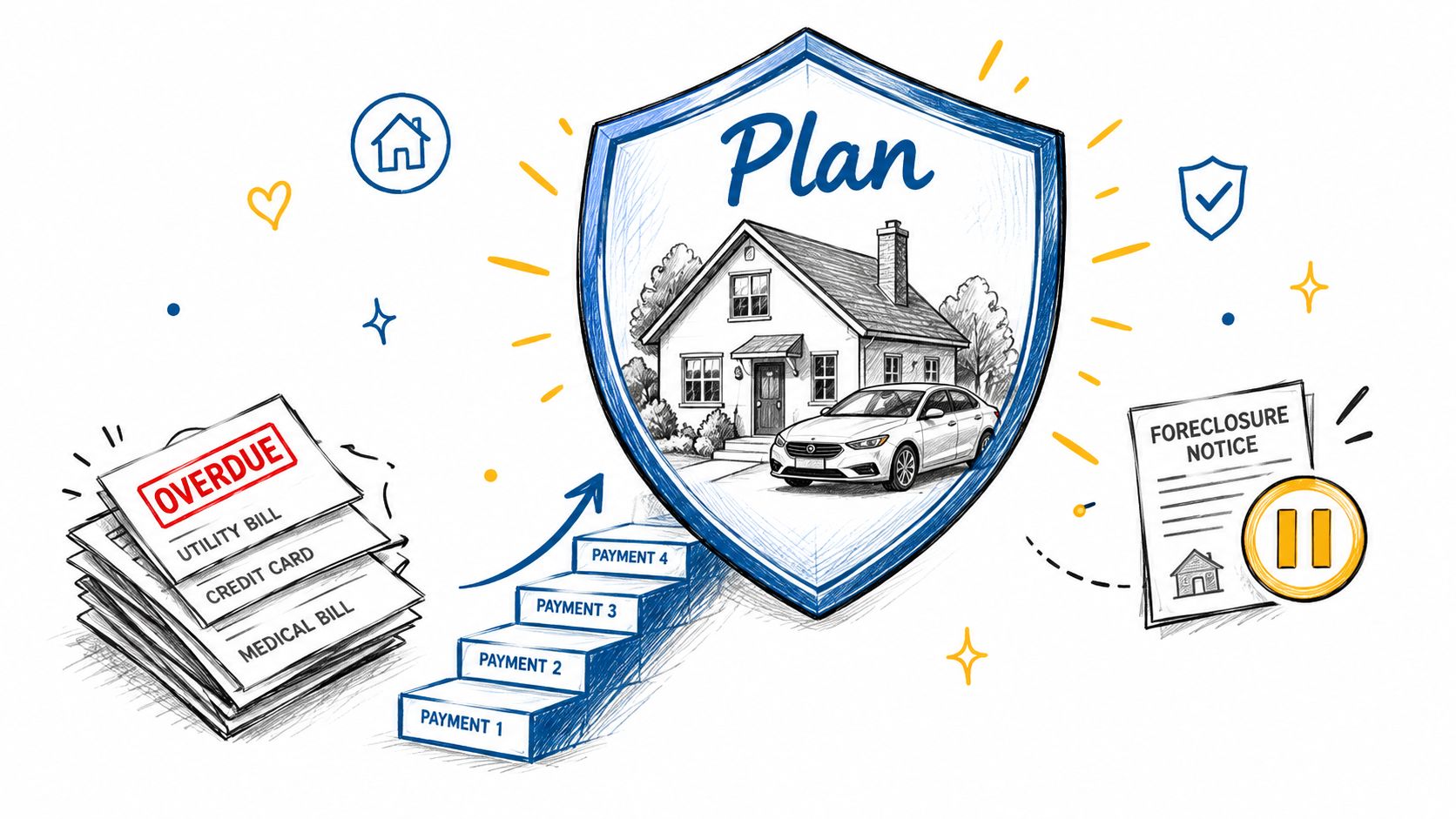
The proposed cure must fit the household budget alongside current secured payments. Local procedure, creditor action, plan feasibility, and eligibility all affect the filing strategy. If the budget cannot support both obligations, the asset may remain at risk. Bring every notice to counsel promptly, and continue required current payments unless counsel gives different lawful instructions.
5. Avoid New Debt and Restrict Credit Use During Your Plan
A repayment plan is built around the debts and financial capacity disclosed at filing. Opening a new credit card, signing a personal loan, financing a major purchase, or co-signing for another person can disrupt that structure. New debt can also make the monthly budget impossible, even when the purchase seems necessary at the time.
A Duluth filer who needs a vehicle repair may be tempted by a dealership financing offer. A St. Cloud family may want to finance a home improvement project. A Minneapolis debtor may receive a pre-approved card and assume that using it for groceries is harmless. Each decision should be discussed with bankruptcy counsel before any application, signature, or charge.
Replace credit with planning
Discard unsolicited offers and tell household members which credit restrictions apply. Create a cash plan for predictable expenses such as vehicle maintenance, insurance renewals, school costs, and seasonal heating bills. A separate emergency reserve can provide limited flexibility without adding an unauthorized creditor.
New borrowing isn't a private decision during an active Chapter 13 case. It can affect the plan, the court's assessment, and the ability to make required payments.
If legitimate secured credit becomes necessary, counsel can explain whether approval is required and what documentation may be needed. The filer should never rely on a lender's statement that approval isn't necessary. Post-discharge credit rebuilding should be planned separately, with secured-credit options and payment capacity reviewed only after the case requirements allow it.
6. Document and Report Income Changes Immediately
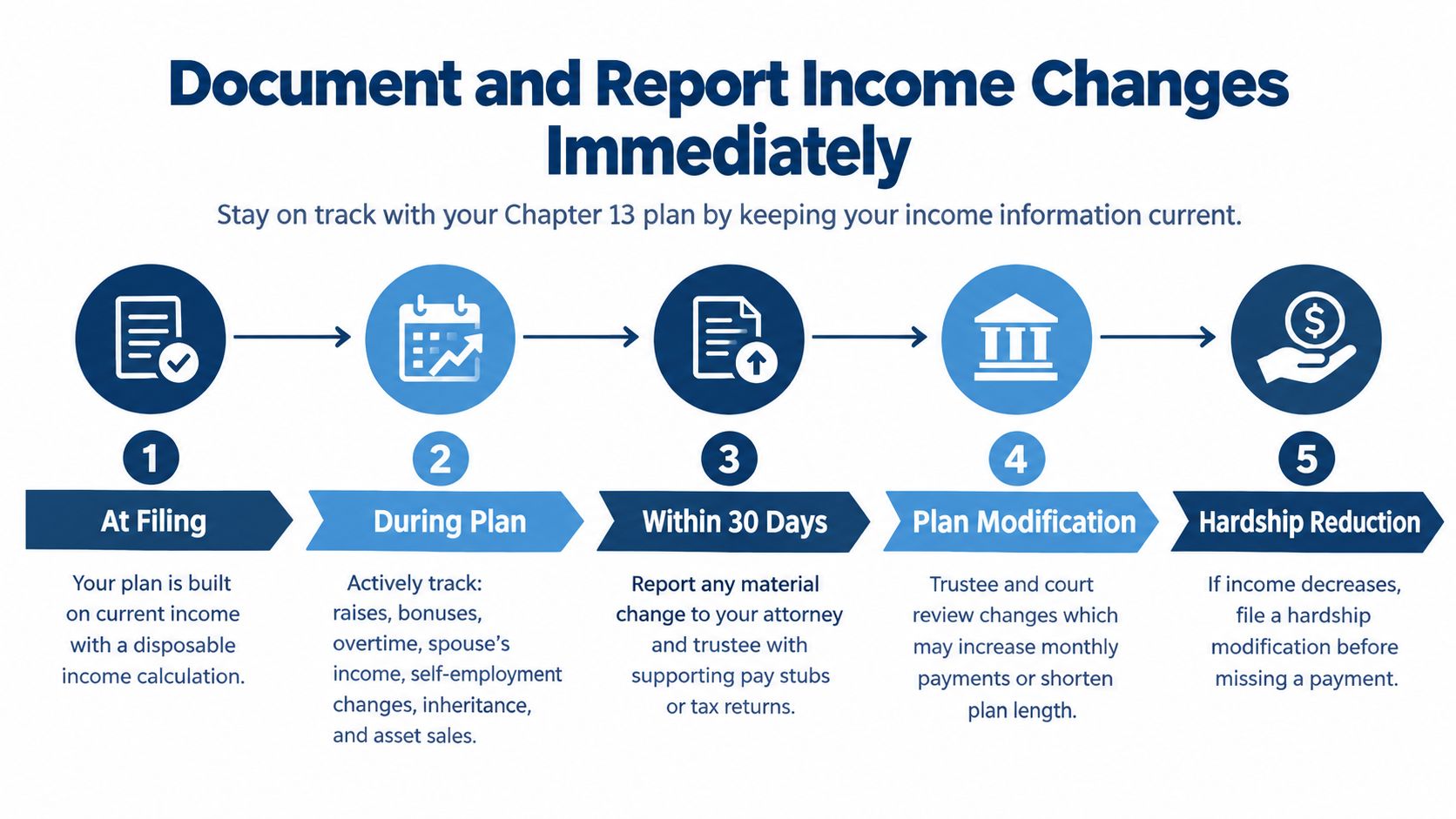
The plan reflects the household's financial picture at filing, but employment and income rarely remain static throughout a long repayment period. A promotion, overtime, bonus, job change, inheritance, asset sale, benefit change, or business fluctuation can affect the case. A reduction in wages or business revenue can create a different problem, one that may support a modification if properly documented.
A Brainerd employee who receives a significant raise should preserve the offer letter and updated pay records before discussing the effect with counsel. A St. Paul self-employed filer with a slow season should maintain reliable profit-and-loss records rather than relying on an informal estimate. A household receiving an inheritance should report it before distributing or spending the funds.
Create an income record that counsel can use
A simple spreadsheet or folder should track each source, payment date, gross amount, deductions, and supporting document. For variable earnings, retain business statements and periodic profit-and-loss information. Temporary overtime shouldn't be treated the same as a permanent wage increase without review.
The filer should contact LifeBack promptly after a material change and, when possible, before an anticipated change takes effect. Counsel can determine whether disclosure, a plan modification, an amended schedule, or another action is appropriate. Reporting an increase doesn't automatically mean the result will be negative. It may support a more accurate plan or help resolve the case sooner, while failure to disclose can create much more serious consequences.
7. Obtain Court Approval Before Making Major Financial Changes
A major financial change can alter the money available for your Chapter 13 plan. Marriage, divorce, a job transition, promotion, home purchase, vehicle purchase, or new borrowing may require trustee involvement, updated disclosures, a modified plan, or court approval. The correct order is simple: discuss the decision with counsel before signing or spending.
For example, a Rochester filer replacing a vehicle should provide the proposed price, financing terms, insurance cost, and monthly payment before committing. A Duluth debtor who marries should review the spouse's income and household expenses with counsel. A St. Cloud employee accepting a promotion should preserve compensation documents and ask whether the plan payment or reporting requirements change.
Make the call before the commitment
Prepare a short change summary that states what will happen, when it will occur, and why it is needed. Attach the relevant financial documents, such as pay records, purchase terms, loan paperwork, and revised expenses. Counsel can then determine whether the trustee or court must approve the action and identify the required filing or notice.
Wait for clear instructions before you sign, borrow, transfer assets, or change payment arrangements. A necessary vehicle may be reasonable, while a new loan for a discretionary purchase may create avoidable problems. The same review applies to asset sales, refinancing, large gifts, and changes to household finances.
Keep your address, phone number, and email current with the trustee and court. Prompt updates prevent missed notices and give counsel time to address a routine change before it becomes a compliance problem.
8. Build an Emergency Fund Within Your Monthly Budget
A broken-down car on a Minnesota road, higher heating costs during a North Dakota winter, or an unexpected medical bill can disrupt a Chapter 13 budget quickly. Without a reserve, a filer may have to choose between paying the trustee and covering a necessary expense.
Set the reserve at an amount the approved budget can support. It should be visible in the household budget, not treated as hidden income or kept outside case reporting requirements. LifeBack can help review spending, identify a realistic monthly amount, and separate emergencies from discretionary purchases.
Keep the money in a separate account used only for defined needs. Schedule an automatic transfer after dependable income arrives, then adjust the amount if income or required expenses change.
Assign the reserve before an emergency occurs
Use the fund for transportation stability, such as repairs needed to keep working. It can also cover housing continuity, including urgent maintenance or utility-related costs, and medical response when insurance or regular budget categories do not cover the bill. Preserving funds for a trustee payment protects the case from a preventable missed payment.
Review ways to lower recurring bills while setting the budget. Any savings should remain assigned to approved household needs. A modest reserve gives a filer room to handle disruption without unauthorized credit or skipping a required payment. Replenish it after use before treating the account as available spending.
9. Protect Your Case from Dismissal by Responding to Court Orders
Chapter 13 requires more than sending money. Court notices, trustee requests, tax-document demands, hearing notices, and plan-related correspondence can carry deadlines that affect the case. Ignoring an envelope because the filer expects bad news doesn't make the deadline disappear.
A Minneapolis debtor who receives a request for updated tax information should send it to counsel immediately and confirm what must be filed, where it must go, and by what date. A Brainerd resident who sees a notice about income verification shouldn't wait for a second letter. A St. Paul filer who receives a hearing notice should confirm attendance requirements and whether counsel will appear.
Use a document-control system
Open official mail the day it arrives. Scan or photograph each page, save the envelope when the postmark matters, and place every deadline on a calendar with reminders. Keep separate folders for trustee payments, court filings, lender communications, tax documents, and attorney correspondence.
A confusing notice is a reason to contact counsel, not a reason to wait.
LifeBack's communication tools, including live support where available, can help a filer route a question quickly. The legal team still needs the complete notice and its deadline. Sending only a summary can leave out the language needed to choose the correct response.
10. Modify Your Plan If Income Decreases or Hardship Occurs
A job loss, reduced hours, medical crisis, divorce, or business downturn can make the original payment unworkable. The dangerous response is to stop paying and hope the case can be repaired later. A modification request may be available, but it must be evaluated and filed through the proper process before arrears become unmanageable.
A Fargo worker whose hours are cut should preserve schedules, pay records, and employer notices. A Rochester household facing major medical expenses should collect bills, insurance explanations, and evidence of the continuing impact. A St. Paul filer who loses employment should contact counsel immediately, even if a new job search is already underway.
Compare the available paths
A modified plan might change payment terms or address a different financial reality. In some cases, counsel may need to evaluate conversion, dismissal, or another remedy instead. The right choice depends on income, assets, debt treatment, plan history, and whether the hardship is temporary or permanent.
For a practical discussion of the process, see modifying a Chapter 13 payment plan. While a request is pending, the filer should continue payments if possible and follow counsel's instructions. Documentation should be complete and candid. Exaggerating hardship can damage credibility, while minimizing the problem can prevent timely relief.
11. Complete Your Financial Management Course Before Discharge
The post-filing financial management course, also called debtor education, is a discharge requirement. It is separate from the pre-filing credit counseling requirement. A filer who completes the plan but fails to complete the required course can face a preventable delay or lose the benefit of discharge.
A Rochester debtor can complete the course well before the projected end of the case and provide the certificate to counsel. A Duluth resident who prefers personal instruction can look for an approved in-person provider. A Minneapolis filer with an irregular schedule may choose an approved online format if it satisfies the applicable requirements.
Treat the certificate as a case document
Choose an approved provider, complete the course within the required timing, and save the certificate in both a physical file and a secure digital folder. Send a copy to LifeBack rather than assuming the provider's submission has been matched correctly to the case.
The course can reinforce budgeting and credit-management habits, but it doesn't replace a review of the actual discharge requirements. A filer should ask counsel which tasks remain outstanding and confirm that the certificate has been received. Completing the course early reduces the chance that a final administrative issue will hold up the fresh start.
12. Understand Discharge Requirements and Timeline to Freedom
Discharge follows completion of the plan and satisfaction of the court's legal and administrative requirements. Chapter 13 cases commonly last three to five years. Treat the projected end date as a planning target, not a guaranteed result, until the trustee and court confirm that payments, documents, and other required steps are complete.
A Minneapolis filer can ask counsel for an estimated completion date and keep it beside the remaining payment schedule. A St. Cloud household approaching the final months should review payment records, address information, and any outstanding trustee requests. A Duluth family should also avoid major new obligations merely because the plan is nearly finished. A new loan or missed requirement can complicate the final review.
Know which debts remain
Discharge generally covers eligible remaining unsecured obligations, subject to the specific facts and applicable rules. It does not automatically eliminate mortgage obligations, vehicle liens, certain taxes, support obligations, or other debts that receive different treatment. Obtain a case-specific explanation before assuming a balance will disappear.
Keep payment records through the final month and respond promptly to any request from the trustee or court. If a required document is missing, address it before the anticipated completion date rather than waiting for a final notice.
The discharge order also does not make every financial issue disappear overnight. Confirm which debts were discharged, which liens remain, and which accounts require follow-up after the case closes. Careful records and timely responses help prevent an avoidable delay in receiving the fresh start.
13. Leverage LifeBack's 90-Day Post-Bankruptcy Program for Credit Rebuilding
Discharge closes a bankruptcy case, but it doesn't instantly restore ordinary borrowing terms or eliminate every record that needs review. The next phase requires controlled credit use, accurate reporting, sustainable budgeting, and caution around financing offers. LifeBack describes a 90-Day Post-Bankruptcy Program as support included with every case, with a personal specialist, credit-rebuilding guidance, Minnesota financing resources, and judgment-removal assistance.
A Minneapolis filer can prepare a list of collection accounts, judgments, and reporting concerns before discharge. A Fargo or Bismarck resident can discuss transportation needs before applying for financing. A Duluth household should establish a payment budget before accepting a secured card or other credit product.
Rebuild with a written sequence
Start with the credit reports and identify errors, unresolved judgments, and accounts that should reflect the case outcome. Discuss secured-credit options with the LifeBack specialist before applying. Use only a payment amount the post-discharge budget can support, and avoid treating a new credit limit as available spending money.
Financing research should be approached carefully. A resource such as post-bankruptcy financing guidance from Business Loan Warrior may provide general information, but a filer should evaluate every offer against the household budget and case-specific advice.
The program's value depends on participation. Scheduled check-ins, organized records, and deliberate decisions can make recovery more stable than immediately pursuing a large loan or multiple accounts.
14. Confirm Final Payments, Certificates, and Case Closure
As your Chapter 13 plan nears completion, confirm that the trustee has credited every required payment and that no unresolved issue could delay discharge. Do not assume the final payment closes the case automatically. Review the trustee's records with counsel and address any remaining balance, notice, or creditor dispute.
A Minneapolis filer should verify the final payment date and ask whether any trustee documentation remains outstanding. A St. Paul homeowner should confirm that mortgage payments are current after the arrears included in the plan have been addressed. A Brainerd resident should keep copies of the payment history, discharge-related notices, and any certificate required before the court can enter a discharge.
Keep closure records organized
Use one bankruptcy email folder, one physical file, and one calendar. Save payment confirmations, trustee correspondence, court notices, course certificates, and the final discharge order. Record each deadline and follow-up task rather than relying on memory.
Keep LifeBack informed if your address, telephone number, employment, or household changes before the case closes. Send unclear notices through the firm's communication channel and ask what action is required. After discharge, retain the order and payment records when reviewing credit reports or addressing an account that reports the case incorrectly. Proper closure protects the benefits of completing the plan and gives you documentation if a problem appears later.
Chapter 13: 14-Point Tips Comparison
| Item | Implementation complexity | Resource requirements | Expected outcomes | Ideal use cases | Key advantages |
|---|---|---|---|---|---|
| Understand Your Chapter 13 Repayment Plan Duration and Structure | Medium, requires means test and court approval | Attorney, income/expense records, trustee coordination | Clear 3–5 year payment schedule; asset protection | Filers needing structured, court-approved repayment | Keeps home/vehicle, predictable budgeting, cramdown options |
| Maintain Perfect Payment History with Your Trustee | Low–Medium, routine monthly action but non‑negotiable | Stable income, bank setup for auto-pay, records | Maintains protections; enables discharge if consistent | Employed or consistent-income filers | Single payment point, trustee-managed distributions, legal protection |
| Prepare for the 341 Meeting of Creditors and Remaining Appearances | Low, brief formal hearing if prepared | Documentation (pay stubs, tax returns), attorney attendance | Quick trustee questioning; plan confirmation if satisfactory | First-time filers preparing for confirmation | Routine process, builds credibility, usually brief |
| Prioritize Arrearages and Prevent Foreclosure or Repossession | Medium, plan must incorporate arrearages and current payments | Mortgage/car statements, arrearage documentation, counsel | Stops foreclosure/repossession; catch-up over plan term | Homeowners/vehicle owners behind on payments | Immediate automatic stay, preserves essential assets |
| Avoid New Debt and Restrict Credit Use During Your Plan | Low, behavioral compliance required | Discipline, emergency fund, attorney approval for exceptions | Prevents plan destabilization; risk reduction | Filers needing controlled spending environment | Prevents added debt, enforces financial discipline |
| Document and Report Income Changes Immediately | Low–Medium, ongoing reporting obligation | Pay stubs, tax returns, bookkeeping (self-employed) | Accurate plan adjustments; avoids fraud allegations | Self‑employed, seasonal workers, those with variable income | Transparency protects case; enables legitimate modifications |
| Obtain Court Approval Before Making Major Financial Changes | Medium, formal modification process when needed | Attorney filings, trustee approval, possible hearings | Legally permitted life changes without violating plan | Marriage, job change, major purchases during plan | Flexibility with court oversight; prevents dismissal |
| Build an Emergency Fund Within Your Monthly Budget | Low, disciplined budgeting habit | Small monthly savings account, automated transfers | Cushion for unexpected expenses; reduces missed payments | Tight-budget households wanting safety net | Low-cost risk reduction; prevents plan failure from shocks |
| Protect Your Case from Dismissal by Responding to Court Orders | Medium, ongoing administrative vigilance | Organized document system, timely communication with counsel | Keeps case active; avoids automatic dismissal | All Chapter 13 filers requiring case compliance | Preserves protections; demonstrates good faith to court |
| Modify Your Plan If Income Decreases or Hardship Occurs | Medium, requires prompt filing and proof | Hardship documentation, attorney assistance, possible hearings | Reduced payments or extended term; prevents dismissal | Job loss, medical emergencies, business downturns | Legal pathway to keep case viable during true hardship |
| Complete Your Financial Management Course Before Discharge | Low, single required course completion | Course fee ($15–50), 2–3 hours time | Eligible for discharge upon completion | All filers approaching discharge | Improves financial literacy; court-required for discharge |
| Understand Discharge Requirements and Timeline to Freedom | Low–Medium, informational and compliance tracking | Payment records, course certificate, attorney guidance | Elimination of unsecured debts after plan completion | Filers planning end-of-plan transition | Clear endpoint, debt relief, motivation for compliance |
| Leverage LifeBack's 90-Day Post-Bankruptcy Program for Credit Rebuilding | Low–Medium, scheduled post-discharge activities | Specialist support, secured card deposits, credit monitoring | Accelerated credit recovery over 12–24 months | Recently discharged clients seeking rapid rebuild | Personalized guidance, lender access, judgment removal assistance |
Keep the Fresh Start on Track
Chapter 13 works best when the filer treats the case as an active financial project rather than a one-time filing. The court-approved plan sets the framework, but the household must protect the money needed for trustee payments, current mortgage or vehicle obligations, and necessary living expenses. A payment that becomes difficult should trigger communication, not concealment.
The most urgent habit is payment control. Set payment dates around reliable income, use automation where appropriate, retain confirmations, and review records regularly. Trustee payments shouldn't be mixed casually with discretionary spending. Current secured payments also require attention, because a plan designed to cure old arrears doesn't necessarily eliminate the need to maintain new obligations.
The second priority is disclosure before action. A promotion, job loss, bonus, inheritance, marriage, divorce, asset sale, home purchase, vehicle financing request, or other major change can affect the plan. Minnesota and North Dakota filers should contact counsel before acting whenever a decision could change income, expenses, assets, household size, or debt. Early disclosure gives counsel time to assess whether a modification, approval request, or another response is needed.
Court communication deserves the same discipline. Open every notice, calendar every deadline, preserve the full document, and send confusing material to counsel promptly. A missed response can create a problem that has nothing to do with the underlying merits of the case. Attendance at the meeting of creditors and later hearings, when required, should be treated as a central plan obligation.
Secured-property threats require immediate attention. A foreclosure notice, repossession warning, or lender dispute can affect the household's housing and transportation. Gather statements, payment records, notices, and insurance information, then seek case-specific review without waiting for the deadline to become imminent.
The final stage also needs planning. Complete the required financial management course early enough for the certificate to be located and filed correctly. Confirm the estimated discharge date, verify final payments, and ask which debts or liens remain. An unsecured balance may receive discharge treatment, while mortgage obligations, vehicle liens, support obligations, taxes, and other debts can continue under separate rules.
Post-bankruptcy recovery should begin before discharge, not after a rejected financing application. Review credit reports, identify judgments or reporting errors, set a realistic secured-credit strategy, and build a budget that supports every new payment. LifeBack Law Firm, P.A. offers a free 90-day post-bankruptcy program with specialist support and recovery resources, according to the publisher information provided for this guide.
Minnesota and North Dakota readers can request a phone, video, or in-person consultation with LifeBack Law Firm, P.A. The firm also offers virtual service options and 24/7 live chat support where appropriate. A consultation can help organize the immediate facts, but the best next step depends on the filer's debts, income, assets, household budget, creditor actions, and deadlines.
LifeBack Law Firm, P.A. provides Chapter 13 representation for Minnesota and North Dakota filers, including plan preparation, trustee-payment issues, modifications, and case communication. Visit LifeBack Law Firm, P.A. to schedule a phone, video, or in-person consultation and connect the repayment plan with a practical post-bankruptcy recovery strategy.