
Filing a Chapter 13 petition triggers an automatic stay that stops foreclosure immediately. That protection lasts only if the homeowner completes a court-approved repayment plan, and 49% of closed Chapter 13 cases ended in a discharge after plan completion in 2024, while 51% of dismissals resulted from failed plan payments (U.S. Courts bankruptcy guidance, NBER analysis).
A Minnesota homeowner may be sitting at the kitchen table with a foreclosure notice, a stack of unpaid bills, and a sheriff's sale date circled in red. The immediate question is simple: Will Chapter 13 stop foreclosure? Yes, filing can halt the sale at once. The harder question is whether the household can afford the plan that follows.
Chapter 13 isn't a permanent escape from the mortgage. It creates a legal runway to cure arrears while regular payments continue, but the homeowner must use that runway carefully. A missed plan payment can put the entire strategy at risk.
Facing Foreclosure and Wanting a Straight Answer
A sheriff's sale notice is on the kitchen table, the sale date is approaching, and the mortgage arrears are growing. The direct answer is yes: a Chapter 13 filing can stop a Minnesota or North Dakota foreclosure sale. It does not make the mortgage disappear or guarantee that the homeowner will keep the property. The true test is whether the household can fund a court-approved plan and keep up with new mortgage payments.
The filing must be accurate and timely. Before submitting the petition, counsel should confirm the current arrears, sale status, property value, income, debts, taxes, insurance, and available homestead protection. A rushed filing with missing information can create problems with the trustee and creditors, especially when the homeowner is trying to stop a sale already in progress.
What to do in the next 24 to 72 hours
If a Minnesota sheriff's sale notice has arrived, record the sale date and send the notice to bankruptcy counsel immediately. Do not assume that a phone call to the lender will pause the process. Ask counsel to verify whether the sale has been scheduled, whether any postponement has occurred, and what filing must happen before the sale can proceed.
North Dakota homeowners should take the same approach with every foreclosure notice and service document. Gather the mortgage statement, payment history, foreclosure papers, recent pay records, bank statements, tax returns, insurance information, and a list of household expenses. The attorney needs the actual documents, not an estimate based on memory.
During the first 72 hours, take these steps:
- Confirm the case number and filing acceptance. Keep proof that the petition reached the bankruptcy court.
- Send the case information to the foreclosure attorney. The lender's counsel must receive accurate notice so the pending sale can be handled correctly.
- Protect the next regular mortgage payment. Filing does not remove the need to pay ongoing mortgage obligations.
- Answer trustee requests quickly. Missing documents or required payments can weaken the case.
- Stop taking on new debt. New borrowing can make the budget and proposed plan fail.
Practical rule: Chapter 13 buys time to cure the arrears. It does not create the monthly income needed to keep the home.
The best time to seek advice is before the final hours before a sale. Early review gives counsel time to test the budget, calculate the cure amount, identify missing records, and determine whether Chapter 13 is realistic. The modern chapter was created through the Bankruptcy Reform Act of 1978, building on wage-earner repayment plans adopted in 1938. Its court-supervised structure can protect a Minnesota or North Dakota home, but only when the proposed payment matches the household's actual finances.
How the Automatic Stay Freezes a Foreclosure
The automatic stay works like a legal freeze. Before filing, the lender may be pursuing the foreclosure process, sending demands, scheduling a sale, or using collection counsel. After filing, those actions generally must stop immediately.
The freeze can cover the foreclosure proceeding itself, a scheduled auction, collection lawsuits, wage garnishments, bank levies, and many other collection efforts. The key point is that the lender can't just continue because the foreclosure started before bankruptcy. The case filing changes what the lender may do next.
What stops and what doesn't
The stay stops foreclosure enforcement, but it doesn't erase the mortgage contract. Mortgage interest may continue to accrue, and property-related obligations such as insurance, taxes, and some homeowners' association charges may still require attention. The homeowner also remains responsible for making ongoing mortgage payments unless a confirmed plan or separate court order changes that obligation.
The stay typically protects the debtor who filed. A separate co-debtor stay under § 1301 may protect a non-filing spouse or co-signer for certain consumer debts, including obligations connected to the mortgage, but its scope depends on the facts. A spouse should not assume that filing alone resolves every issue affecting both parties.
Minnesota and North Dakota homeowners should also understand that bankruptcy protection has exceptions. Repeat filings within the prior twelve months can limit the automatic stay, and certain foreclosure circumstances may require immediate court action. A lawyer must review prior cases and the exact foreclosure posture before promising that the stay will operate normally.
For a plain-language explanation of how the protection operates in a Minneapolis case, homeowners can review how the automatic stay law works in Minneapolis.
The runway has an expiration point
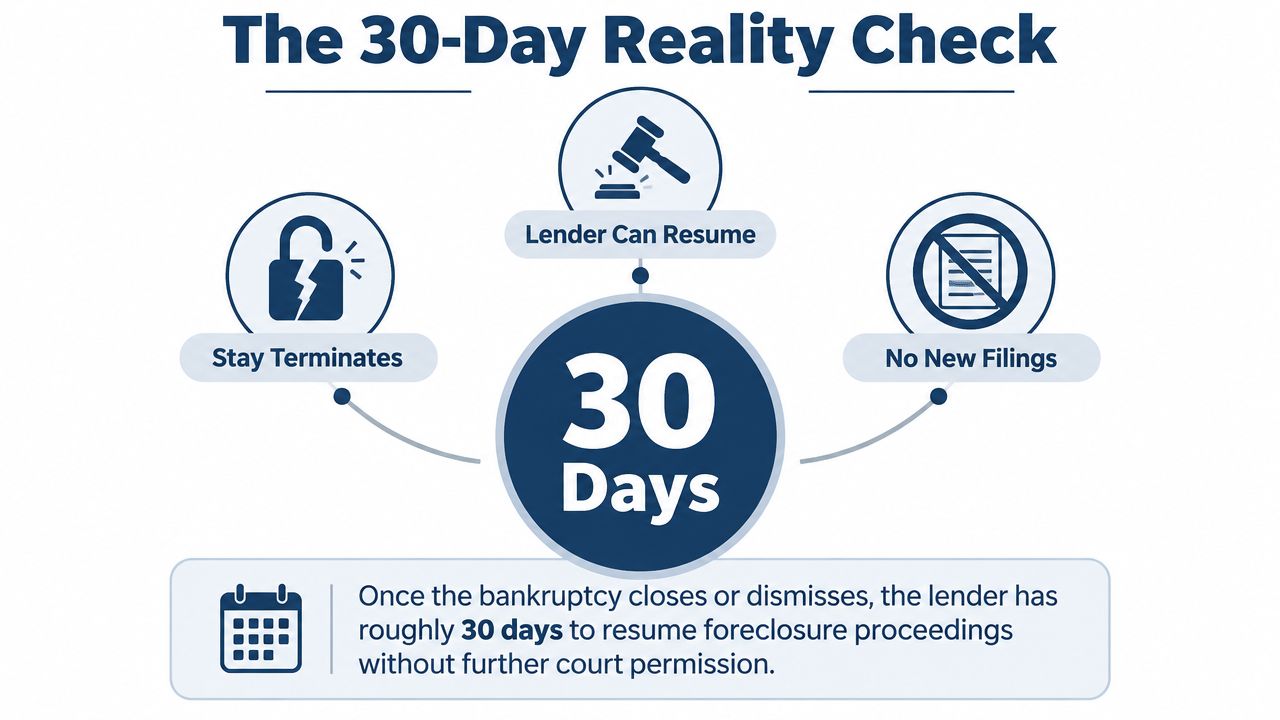
The stay creates the time needed to propose and fund a repayment plan. A Chapter 13 plan generally runs for 36 to 60 months, giving the homeowner a structured period to address mortgage arrears alongside other eligible debts. That period isn't a free pass. It is a test of whether the household can maintain the plan while paying the regular mortgage.
If the case is dismissed or closed before completion, the foreclosure protection can end. The homeowner needs a plan for that possibility before filing, not after the lender resumes collection activity.
Inside a Chapter 13 Plan That Cures Mortgage Arrears
Consider a Minnesota household with $18,000 in mortgage arrears, a $245,000 mortgage, and $3,650 in monthly net income after the regular mortgage payment. Those figures don't establish eligibility or guarantee confirmation, but they show how the basic mechanics can look.
The proposed plan would divide the arrears into monthly payments over the plan term, with trustee compensation and other required obligations included in the calculation. The homeowner would also need to make the regular mortgage payment directly to the servicer beginning with the first post-petition payment. The plan payment and the regular mortgage payment are separate responsibilities.
A sample cash-flow picture
The table below illustrates the structure, not a promised payment. The final amount depends on the verified arrears, trustee fees, attorney fees, priority debts, disposable income, and the treatment of other claims.
Chapter 13 Plan Cash Flow Example
| Line Item | Monthly Amount | Paid To | Duration |
|---|---|---|---|
| Mortgage arrears cure | Calculated from verified arrears | Chapter 13 trustee | 36 to 60 months |
| Ongoing mortgage payment | Contract amount | Mortgage servicer | Throughout the case |
| Trustee and plan costs | Included in proposed plan payment | Chapter 13 trustee and allowed recipients | Under the confirmed plan |
| Household living expenses | Based on documented budget | Household providers | Throughout the case |
A longer plan can reduce the monthly arrears burden, which is why 60 months may be appropriate when the arrears are substantial. The longer period also creates a longer obligation. A homeowner who chooses a payment that looks manageable only on paper may still fail if the budget leaves no room for repairs, medical costs, seasonal expenses, or income changes.
The plan must satisfy the confirmation requirements under § 1325, including the disposable-income and liquidation tests. In practical terms, the budget must show that the debtor is contributing what the law requires and that creditors receive the treatment mandated by the Bankruptcy Code.
Where disputes usually arise
Mortgage creditors may object when the arrears figure is wrong, the plan treats ongoing payments improperly, insurance information is missing, or the proposed payment doesn't account for a post-petition default. The trustee may also object when income, expenses, tax returns, or household contributions don't support the proposal.
A wholly unsecured junior lien may sometimes qualify for different treatment, including potential lien avoidance or reclassification, but that analysis requires a property valuation and a review of the lien position. It isn't a routine benefit available to every homeowner.
For a practical overview of filing stages and plan administration, homeowners can read the Chapter 13 bankruptcy process in Minnesota. Once the plan is confirmed, the trustee distributes payments according to the plan's priority and classification rules. After the required payments are completed and the mortgage arrears have been cured, the debtor can receive a discharge of eligible debts, while the mortgage itself and future payments continue under the loan documents.
When Chapter 13 Still Does Not Save the Home
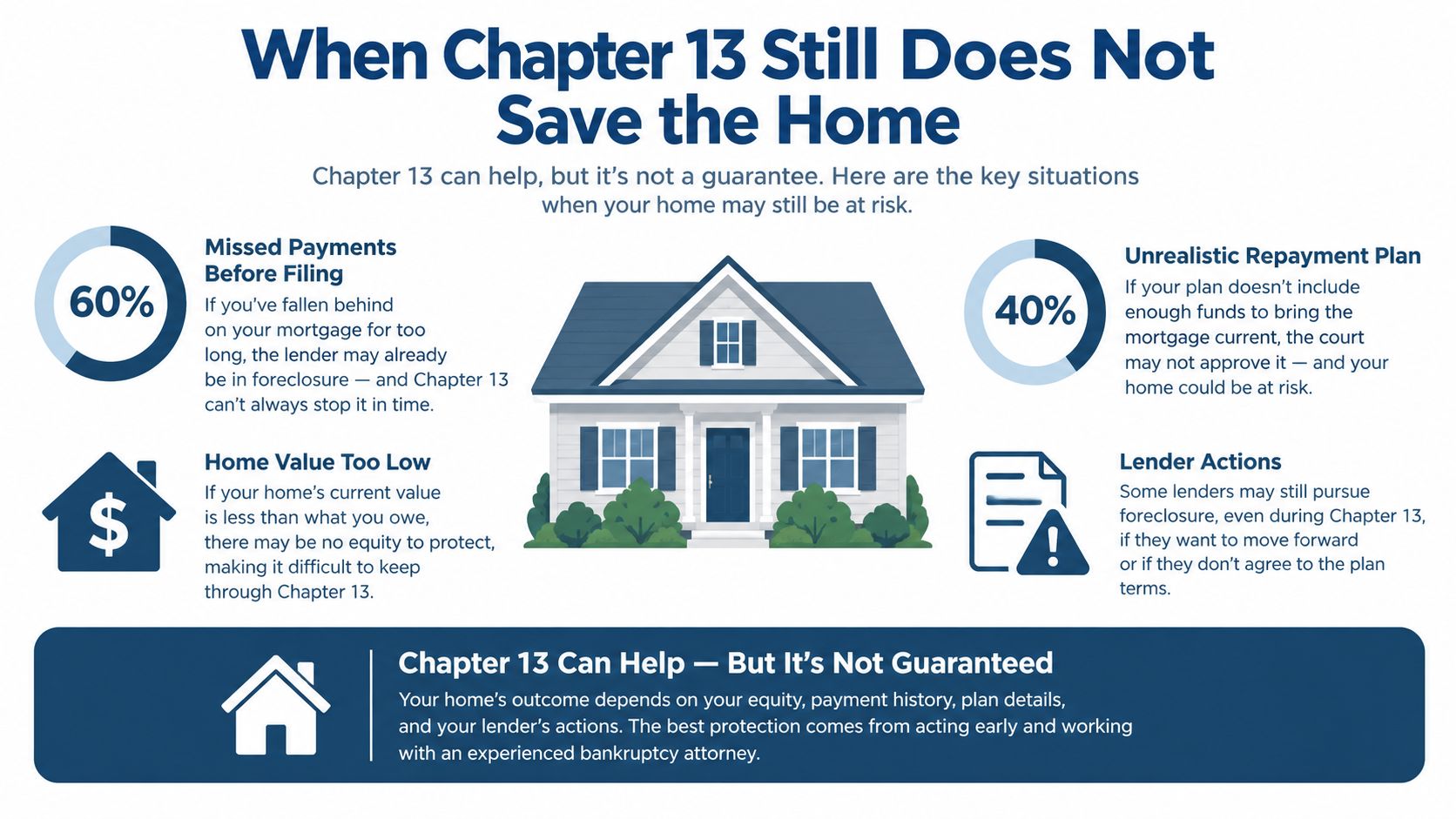
A homeowner can file Chapter 13, stop the scheduled foreclosure, and still lose the house. The protection lasts only while the case remains active and the homeowner follows the plan and mortgage requirements. If the case is dismissed or closed without a completed plan, the lender can resume foreclosure, subject to Minnesota or North Dakota law and any required court process.
A lender can also request relief from the automatic stay. The court may allow foreclosure to continue if the homeowner is not protecting the property, has missed required payments, lacks insurance, or has filed repeated cases. Equity, homestead protection, the debtor's conduct, and the condition of the property all matter.
The numbers demand a candid assessment
Historical research gives homeowners no reason to treat Chapter 13 as a guaranteed rescue. A major NBER study found that, under the law in effect at the time, only about 1% of Chapter 13 filers saved their homes when they otherwise would have defaulted. A Philadelphia Fed study found that close to 30% of bankruptcy filers still lost their houses to foreclosure, rising to 39% among borrowers already six months delinquent and 41% among those twelve months delinquent (NBER study).
More recent federal case data point to the same practical lesson: plan performance controls the result. In 2024, 194,055 Chapter 13 consumer cases were closed, the median time from filing to closing was 1,274 days, and 49% of closed cases ended in a discharge after plan completion. 99,499 cases were dismissed, while failed plan payments caused 51% of dismissals. These figures appear in the relevant federal bankruptcy statistics, not in general filing guidance. A homeowner should review the court's current statistical tables with counsel before relying on national data (U.S. Courts bankruptcy guidance).
Warning signs in the household budget
For Minnesota and North Dakota homeowners, these conditions should stop a rushed filing:
- No dependable income: A plan cannot be funded by the hope that employment will improve.
- A growing mortgage shortfall: New missed payments can defeat the arrears cure.
- Depleted reserves: One ordinary repair or medical bill may make the plan fail.
- Unresolved non-mortgage debt: Credit cards, taxes, utilities, and judgments can consume plan money.
- An unrealistic proposed payment: A budget that omits ordinary expenses will not survive review or daily life.
If the household cannot fund both the arrears cure and ongoing mortgage payments, selling may be more responsible than filing. Before choosing that route, review the short sale process guide. A short sale may require lender approval, take time, and leave questions about remaining obligations. Get a realistic payoff, sale estimate, and monthly budget before deciding.
Chapter 13 Compared to Chapter 7 and Loan Modification
The right choice depends on the specific problem. Chapter 13 addresses a mortgage default through a structured repayment plan. Chapter 7 addresses qualifying unsecured debt but doesn't provide the same long-term mechanism for curing mortgage arrears. A direct loan modification depends on servicer approval and doesn't create an automatic stay by itself.
| Feature | Chapter 13 | Chapter 7 | Loan Modification |
|---|---|---|---|
| Foreclosure protection | Automatic stay upon filing | Automatic stay upon filing | No automatic stay by itself |
| Mortgage arrears | Can be cured through a court-approved plan | No built-in cure plan | May be changed if the servicer approves |
| Ongoing payments | Must generally continue | Must generally continue | Set by the modified agreement |
| Court supervision | Required throughout the plan | Limited compared with Chapter 13 | No bankruptcy court supervision |
| Filing cost | $313 | $338 | Depends on the arrangement |
| Best fit | Steady income and a realistic cure budget | Unsecured-debt relief with a separate mortgage strategy | Current or nearly current borrowers seeking changed terms |
The filing costs above are identified in the federal bankruptcy fee schedule context described in the case plan. A homeowner should confirm the current fee and payment arrangements with counsel before filing.
Chapter 13 is the strongest direct cure tool
Chapter 13 is generally the clearest fit when the homeowner has regular income, wants to retain the property, and can fund both the arrears cure and the ongoing mortgage. The case can coordinate mortgage arrears with other eligible debts, but it requires sustained court-administered payments.
Chapter 7 may help as a short-term freeze while the homeowner pursues a separate modification, but the stay doesn't itself spread missed mortgage payments over a repayment period. After the case closes, the lender may resume foreclosure unless the account is current or a separate arrangement is in place.
A modification can make sense when the borrower is already current or only slightly behind and has a credible way to satisfy the servicer's requirements. It becomes a weak strategy when the lender is delaying, the sale date is approaching, or the homeowner needs a legal halt immediately.
Homeowners with tax arrears should also review how tax debt interacts with the proposed bankruptcy, and a resource on professional tax resolution for bankruptcy cases may help identify issues to raise with counsel. A detailed comparison of the two bankruptcy chapters is available in Chapter 7 versus Chapter 13 bankruptcy.
LifeBack Law Firm, P.A. handles Chapter 13 filings and repayment plans for Minnesota and North Dakota consumers, including cases involving mortgage arrears and foreclosure pressure.
Next Steps for Minnesota and North Dakota Homeowners
A homeowner facing foreclosure shouldn't begin by guessing whether the case is affordable. The first job is to assemble documents that show the actual arrears, income, property value, expenses, and sale timeline.
Gather the records that control the decision
The following documents should be collected immediately:
- Recorded mortgage statement: Obtain the latest statement showing the loan balance, escrow status, and delinquency.
- Arrears payoff quote: Request a figure calculated through a specific date, not an old account screenshot.
- Recent pay stubs: Gather the last two pay stubs for each wage earner.
- Tax returns: Locate two years of federal and state returns, including schedules.
- Foreclosure papers: Keep the summons, notices, sale information, and every letter from the lender's attorney.
- Household budget: List mortgage, utilities, transportation, insurance, food, childcare, taxes, medical costs, and recurring debt payments.
The sale date deserves immediate attention. Minnesota foreclosure timelines can vary by procedure, and redemption rights may also vary. North Dakota homeowners may face a tighter non-judicial timeline after service. Because those processes differ, an attorney should review the papers rather than rely on a general online timeline.
File before the sale becomes irreversible
A Chapter 13 filing should occur before the foreclosure sale whenever possible. The closer the filing comes to the sale, the more likely the homeowner will face an emergency petition, incomplete schedules, unresolved creditor information, and less time to negotiate a workable plan.
Homestead protection must also be claimed correctly on the bankruptcy schedules, including Schedule C where applicable. Equity, ownership, liens, exemptions, and valuation all affect whether the home is adequately protected. A filing that overlooks one of those issues can create avoidable problems.
Do this now: Compare the proposed plan payment with the regular mortgage payment and the household's documented expenses. If the remaining income can't carry both, the filing needs a different strategy.
The consultation should include the documents listed above. Counsel can use them to assess eligibility, run the applicable means-test analysis, estimate a projected plan payment, identify arrears, and determine whether the foreclosure can be addressed before the sale. A same-week consultation is especially important in North Dakota or whenever a sale date is already set.
The homeowner shouldn't stop making payments just because bankruptcy is being considered. Until counsel gives specific instructions, the household should preserve records, protect insurance coverage, avoid transferring property, and respond to requests for information.
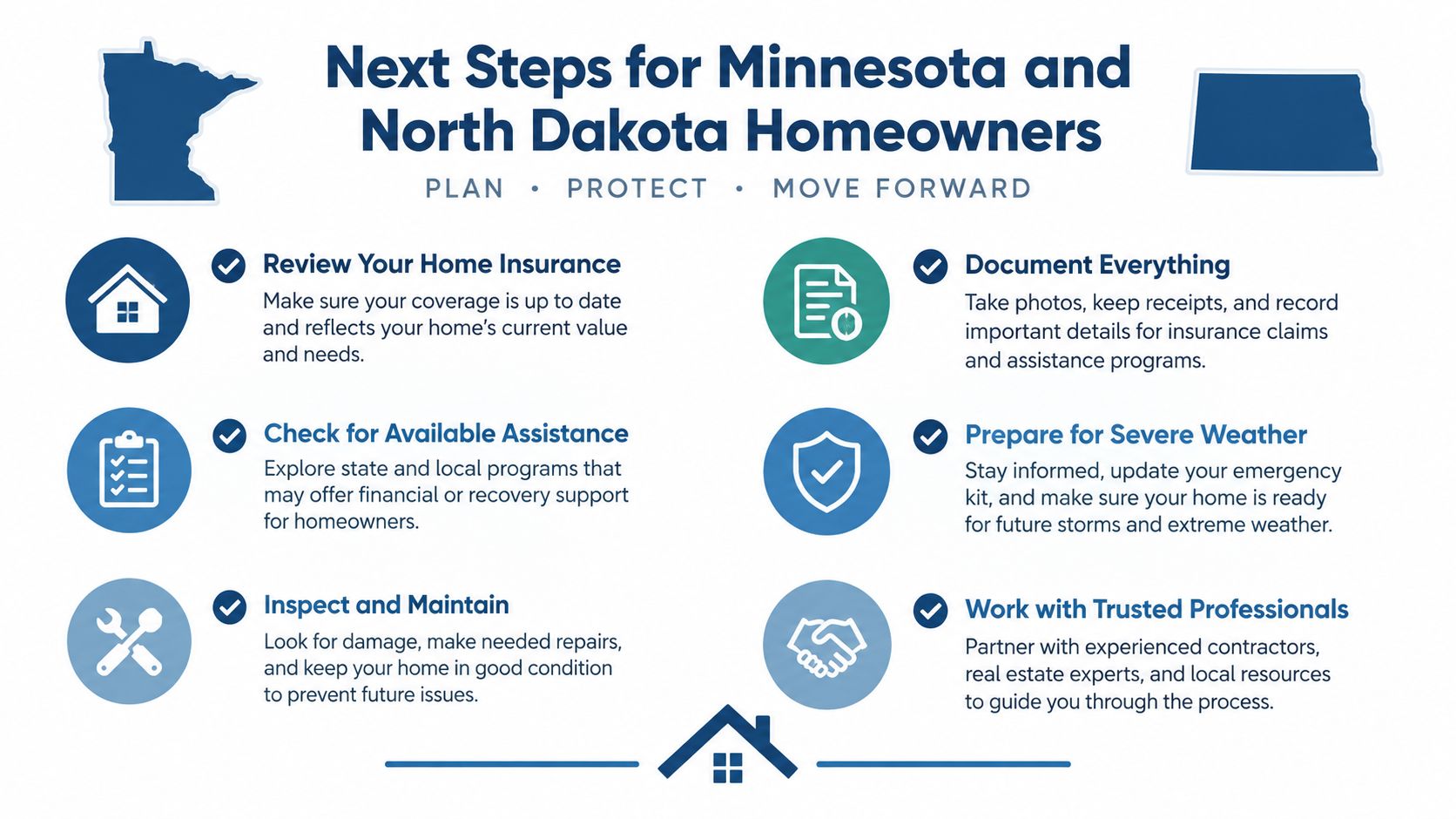
LifeBack Law Firm, P.A. can review the foreclosure timeline, mortgage arrears, income, and household budget to determine whether a Chapter 13 repayment plan is workable. Homeowners should gather the listed documents and visit LifeBack Law Firm, P.A. to request a consultation before the sale date creates an emergency.